Crystal Well-Being

Standard

Want to learn more about the world of crystals and their many uses?

Thanks to Discover Magazine, here are 20 things you may not have known about crystals:
Unknown

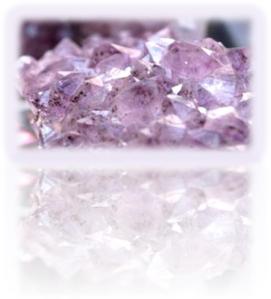
 It’s all about the rhythm: Crystals are repeating, three-dimensional arrangements of atoms, ions, or molecules.

Almost any solid material can crystallize—even DNA. Chemists from New York University, Purdue University, and the Argonne National Laboratoryrecently created DNA crystals large enough to see with the naked eye. The work could have applications in nanoelectronics and drug development.

One thing that is not a crystal: leaded “crystal” glass, like the vases that so many newlyweds dread. (Glass consists of atoms or molecules all in a jumble, not in the well-patterned order that defines a crystal.)

 The oldest known pieces of our planet’s surface are 4.4-billion-year-old zircon crystals from the Jack Hills of western Australia.

5  The center of the earth was once thought to be a single, 1,500-mile-wide iron crystal. Seismic studies now show that the inner core is not a single solid but perhaps an aggregate of smaller crystals.

 Tiny silicate crystals, which need high temperatures to form, have been found inside icy comets from the solar system’s distant, chilly edges. Powerful flares from the sun may have provided the necessary heat.

7  In Chihuahua, 
Mexico, a limestone cavern 1,000 feet below the surface contains the largest crystals in the world: glittering gypsum formations up to 6 feet in diameter and 36 feet long, weighing as much as 55 tons.

 You may be sitting in a gypsum cave right now: It is a primary component of drywall.

 Are the streets of New York paved with gold? No, but the bedrock schist beneath them is studded with opal, beryl, chrysoberyl, garnet, and three kinds of tourmaline.

10  In 1885 a garnet weighing nearly 10 pounds was discovered beneath 35th Street near Broadway, close to today’s Macy’s store. According to urban lore, it was unearthed either during subway construction or by a laborer digging a sewer.

11 Cheaper by the pound: The so-called Subway Garnet was sold within a day, reportedly for $100—just $2,300 in today’s dollars.

12  The unit of measure for gemstones had humble beginnings. “Carat” comes from the Greek keration, or “carob bean,” which was used as a standard for weighing small quantities. It is equivalent to 200 milligrams, or about 0.007 ounce.

13  When Richard Burton bought Elizabeth Taylor the heart-shaped Taj-Mahal diamond, he is said to have bragged, “It has so many carats, it’s almost a turnip.”

14 A “fancy intense pink” diamond recently set a world record when it was purchased at auction for $46 million by a London jeweler.

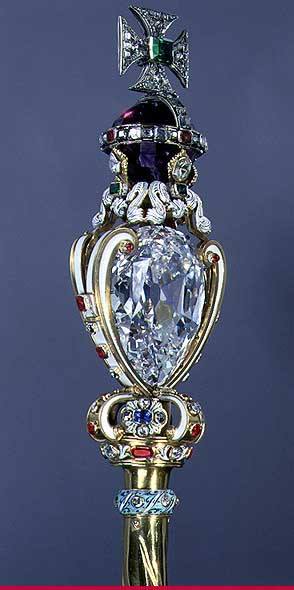
15  The Cullinan diamond is the largest known gem diamond—or, actually, was. It weighed 3,106 carats, or nearly a pound and a half, when it was discovered in South Africa in 1905, but it has since been cut into more than 100 stones.

16  The Cullinan stones, all flawless, are now part of the British Regalia. The largest, a 530-carat behemoth, is set in one of the British royal scepters.

17  For the rest of us, there is crystallized sodium chloride, otherwise known as salt. We are literally awash in it: If the water were evaporated from the world’s oceans, we’d be left with 4.5 million cubic miles of salt, equivalent to a cube measuring 165 miles on each side.

18  Another crystal for commoners: sugar. Each American eats an average of more than 130 pounds of it per year.

19  As if sugar’s ties to obesity and tooth decay weren’t enough, new research out of Imperial College London suggests that it contributes to high blood pressure, too.

20 Snow is near-pure crystallized water, but when it collects on the ground it acts as a reservoir for atmospheric pollutants such as mercury and soot. So you probably shouldn’t eat the white snow either.

Come to the Wellness Activity to explore the power of crystals and see what they are all about!

Tuesday 3/18/14
S103
3:30 – 4:30pm

Creativity Conference at GCC

Standard

ImageThe most valued and sought after skill in the 21st Century is the ability to think and solve problems creatively – to be innovative.  Therefore, it is urgently important for everyone to understand how to be deliberately creative in their professional, academic, and personal lives.  This Conference is seeking examples of creativity in the areas of Business and Education (K-16) to share with our regional community.


Our goal is to broaden the conversation around the application of creativity and innovation.  Our Business track includes the use of creativity within all organizations, both for-profit and non-profit.  In our Education track, we intend to share best practices, tools, and techniques in teaching students (K-16) how to think creatively within and across disciplines.

Ready to get creative? Register today! Simply search for the “Creativity Conference” and add it to your schedule!

Friday Visit Days Now Available!

Standard

Want to stop in and pay a visit before you kick off a relaxing weekend? Come to a Friday Visit!

Friday Visit Days are less formal but more up-tempo alternatives to Open Houses. You can get an introduction to admissions, hear all of the facts on the application process and financial aid, plus sit in on an actual college class at any of these Friday Visit Days.

Friday Visit Days are held at the Batavia Campus at 9am:

March 21
March 28
April 4

Register today for your Friday Visit!

College Stress

Standard

If I had to give an incoming student advice about GCC, I would tell them that it is much different than high school and is your time to turn your life around. It’s not a time to goof off and just relax all the time like you may have in high school. You have to buckle down and get your work done and done on time.

Not all the teachers worry about you like they do in high school. You are on your own now, and how you plan your time is up to you. If you don’t get work done in time it is your own fault. Also you need to learn how to plan your time wisely. Study, study, study and review your notes that you took in class that night or sometime that week to keep the information fresh in your head.  Make sure you get to know your professors and make sure they know who you are.

Make sure you come to class prepared every single day with a pen, notebook, textbook, and a folder. It is the little things that matter the most to the professors. The more you participate in class activates and show that you care the better chance you will have to grow a relationship with that professor and better opportunities. You may even have a better chance than the other students to get the extra help that you may need quicker than someone else would because that professor knows that you care and want to pass the class.

Take good notes while in class, and make sure you are listening to the teacher talk at all times during the period. To me organization is one of the most important things. If you are not organized it is much harder to find things you need in your notes that day in class or if you are not organized you can lose notes, homework, or other important papers that are needed to help you pass the class.

The most important thing to remember is to never give up even when you feel like it is impossible to get by. Don’t be afraid to ask for the extra help. Use the tutors that the school gives you if you are having a lot of trouble in a class or don’t be afraid to just ask the professor. There is always people that want to help you along the way.

-Joshua Lathan

St. Patrick’s Day Party at College Village

Standard

Shamrock

Get your green gear ready for College Village’s St. Patrick’s Day Party!

On Monday March 17, we’ll be celebrating in the College Village Basement with four hours of fun. Each hour will be a different party, so you’re always in for something new!

The party lasts from 6:00 pm – 10:00 pm with a scavenger hunt, food, desserts, and pots of gold!

Yeah, I was Nervous.

Standard

When I first thought about applying to college, the thought was terrifying. Going to a new place and not knowing anyone can be quite overwhelming. I was nervous about everything that you could possibly think of; I thought about it and worried incessantly.

I was so nervous that I was not going to be able to handle anything in college, my classes and the people in them. I was worried about the work and not getting it done on time, since a lot of the homework is all online. I was nervous about not getting to classes on time, because in a few of my classes attendance is part of your overall grade. I think I was most nervous about people and feeling out of place.

As soon as the semester started and I got through my first day, I was less nervous about coming to class and getting all of my work done. People do and will always make me nervous but as the semester goes on, I have high hopes that I will get used to it and make friends. If I just do me then everything will be alright.

– Kristen Schwab

SUNY Mascot Madness!

Standard

mascot_maddness_banner_2014It’s back for it’s second year – SUNY Mascot Madness! Inspired by NCAA Basketball’s March Madness, SUNY has pitted over 40 mascots against each other to claim the title of #1 Mascot.

Last year, G-Dub the Cougar fell to Farmingdale Community College in the first round, but he is back and ready to win, taking on Alfred State and Mohawk Valley Community College in the first round of 2013’s Mascot Madness.

Last year, nearly 200,000 votes were cast in the final matchup – “Hugo” from SUNY New Paltz vs. “Wolfie” from Stony Brook University, with New Paltz ultimately coming out on top.

Each round lasts approximately one week, allowing voters to choose their favorite mascot once a day.

Vote today for G-Dub to help him earn the title of SUNY Mascot Madness 2014 Champion!

College: A Whole New Challenge

Standard

I’ve only been in college for a few weeks now. When I stop and think about it, it seems kind of crazy that I could have learned a whole lot about myself as a student in such a short time, but the truth is I have. When I first started I was a little nervous but I had done well in high school. How different could it really be? As it turns out college isn’t as simple as I thought.

I now have to manage my time more efficiently than I ever thought I could. Assignment due dates are much more spread out in college than in high school, giving the illusion that there is plenty of time to get them done. Having an agenda has greatly helped me in managing my time, and I suggest that every college student use one. Dates, times, and assignments have a way of creeping up on me. Being responsible about my time has helped me greatly.

I am responsible for way more in college than I ever was in high school. No one is telling me what to do, where to go, or how to go about things. Taking responsibility for what needs to be done isn’t a new concept to me. However school has taken it to a whole new level. I am no longer only responsible to pay bills and go to work; I am now responsible to complete school work as well.

Finally, the greatest thing I have found with my college experience is a new confidence starting to blossom. I used to be afraid to say the wrong thing. Going to classes I have found that no one is laughing at me. Everyone I am in class with is feeling the same thing. We are all out of our element and we are all there for the same reason.

Over all I would say I have learned a lot about myself in the time that I have been at GCC. It’s defiantly a challenge but a rewarding one. I am looking forward to see how I grow as an individual in the next two years.

-Gina Constable

Deciding on GCC

Standard

Choosing GCC was a very interesting experience because I knew it was the school for me when I was introduced to it. I played AAU basketball the summer before graduating high school. I played in many showcases and tournaments is to be seen by many colleges. One day my dad told me that I had gotten an email from a college coach that seen me play in a recent tournament that I was in. I thought it was cool to have a college coach recognize me for the way I was playing. My dad and I looked online at the school website and found it to be very pleasing. Things where easy to find and they had a great Veterinary Technology program that I caught my eye on. That day I emailed the coach back and told her I was interested.

I was going to my last showcase which she said she would attend. After I finished playing my first game I finally met Coach Christie McGee-Ross. Reading her bio was very compelling, she was nice and polite and I could tell that she was a very accomplished coach. That made me figure that she came from a school with other polite people. I also met the assistant coach, Dena. Coach McGee-Ross even introduced me to her 11 year old daughter. I wanted to go somewhere to where I knew I could create a family, and meeting the coaches made me feel a family vibe.

From then on I stayed in contact with the coach to set up a visit. I was hoping that the campus was really nice, and upon my arrival to Genesee Community College the campus I wasn’t let down. When I was going to meet the coach, a former player gave me a tour of the entire school. It was very fun. Once again everyone that I met was very polite and I even met another recruit while visiting, and she seemed extremely nice as well. That made me more excited about GCC and even more ready to commit myself to this school. In weeks time I was signing a letter of intent to be a Genesee Cougar!

-Breana Gleaton

A Tale for Three Counties Brings Karen Thompson Walker to Campus

Standard

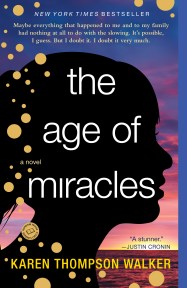
The Tale for Three Counties Committee has worked to invite award winning author Karen Thompson Walker to GCC to speak about her newest book, The Age of Miracles. After her talk, she will be available to sign copies of her book.

Thursday, March 20
T102 – Batavia Campus
1:00 p.m.

kt-walker

Karen Thompson Walker was born and raised in San Diego, California, whereThe Age of Miracles is set. She studied English and creative writing at UCLA, where she wrote for the UCLA Daily Bruin. After college, she worked as a newspaper reporter in the San Diego area before moving to New York City to attend the Columbia University MFA program.

A former book editor at Simon & Schuster, she wrote The Age of Miracles in the mornings before work, sometimes while riding the subway.

She is the recipient of the 2011 Sirenland Fellowship as well as a Bomb Magazine fiction prize. She lives in Brooklyn with her husband.

Image

There will also be four book discussions at GCC before Karen’s talk:

Tuesday, March 18 – 11am in T119
Tuesday March 18 – 12:30pm in T123
Wednesday, March 19 – 10:15am in T119
Wednesday, March 19 – 11:15am in T119

All GCC students are eligible to enter an essay contest to win lunch with Karen! Two prizes will be awarded. Entrants: read the Participation Agreement for more details.