How is your Heart doing?

Standard

By Pinn Duong

February is not only the time to give out hearts to your loved ones, but also the time to take care of your own heart. February is American Heart Month, first proclaimed by President Lyndon B. Johnson in 1964 to raise awareness and urge Americans to adopt a healthy lifestyle against the battle of heart diseases. As the leading cause of death for both men and women in the US and globally, American Heart Month pays tribute to health professionals, researchers and volunteers for their tireless battle in preventing and treating heart patients.
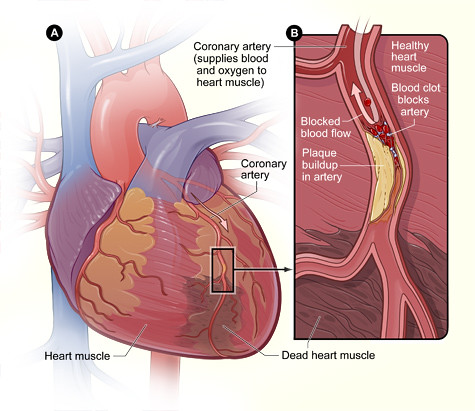
Image result for blood clot artery heart
(Image: National Institutes of Health) Blood clotting in artery

Heart diseases spare no one, not even the youth. The good news is that 80% of heart diseases are preventable. Below are some age-old critical reminders to ‘stay young at heart’, and prevent it from aging prematurely:

  • Keep a hearty diet of low-trans fat, low-saturated fat, low-sugars, and low-salt foods. 90% of Americans are consuming too much salt via pizza, pasta dishes, cold cuts, chicken and yeast breads, which are the top 5 foods that dominate American salty diet.
  • Stay active with two to three sessions of 10-15 minutes of exercises through out the day. Being active doesn’t mean toiling in the gym for hours. Something is always better than nothing; don’t give into the taking the elevator when you can take the stairs.
  • Track your numbers on weight, blood pressure and cholesterol.
  • Manage a healthy weight.
  • Screen for diabetes, which can lead to heart disease if left untreated.
  • Manage stress via mediation, exercise, and healthy relaxing techniques. Coping with stress using alcohol, smoking, or overeating is a huge no-no. You can even manage stress with proper breathing techniques for just 10-20 min /day. Laughing can increase healthy blood flow through your body by 22%.
  • Keep a high-quality sleeping pattern to restore your body and mental health. Sleep deficiency promotes weight gain, diabetes, and cause low-grade inflammation inside blood vessels that lead to heart diseases
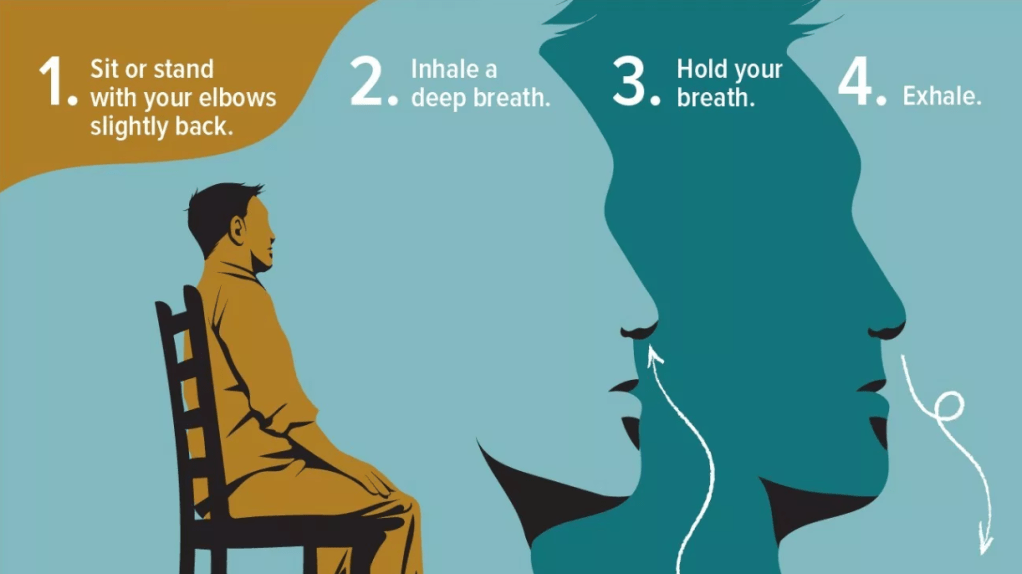
(Image: Healthline)

Say NO to:

  • Smoking. The nicotine in smoke reduces how much oxygen your heart gets and raise the risks of blood clots.
  • Excessive alcohol use. Overdrinking alcohol causes irregular heartbeats (called atrial fibrillation), which increases your risks of stroke, heart attack or heart failure. The American Heart Association suggests no more than one drink per day for women and two for men.

FUN FACTS

  • Newborn babies have the fastest heart beats of 70-190 / min while an average adult has a resting heart rate of 60-100 beats / min. A regularly trained athlete has an even slower resting heart rate of 40-60 beats / min.
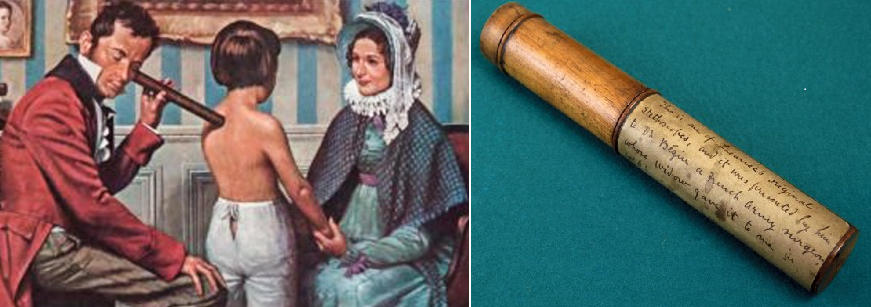
  • Before the invention of stethoscope, doctors had to press their ears into the patient’s chest to detect heart beats.
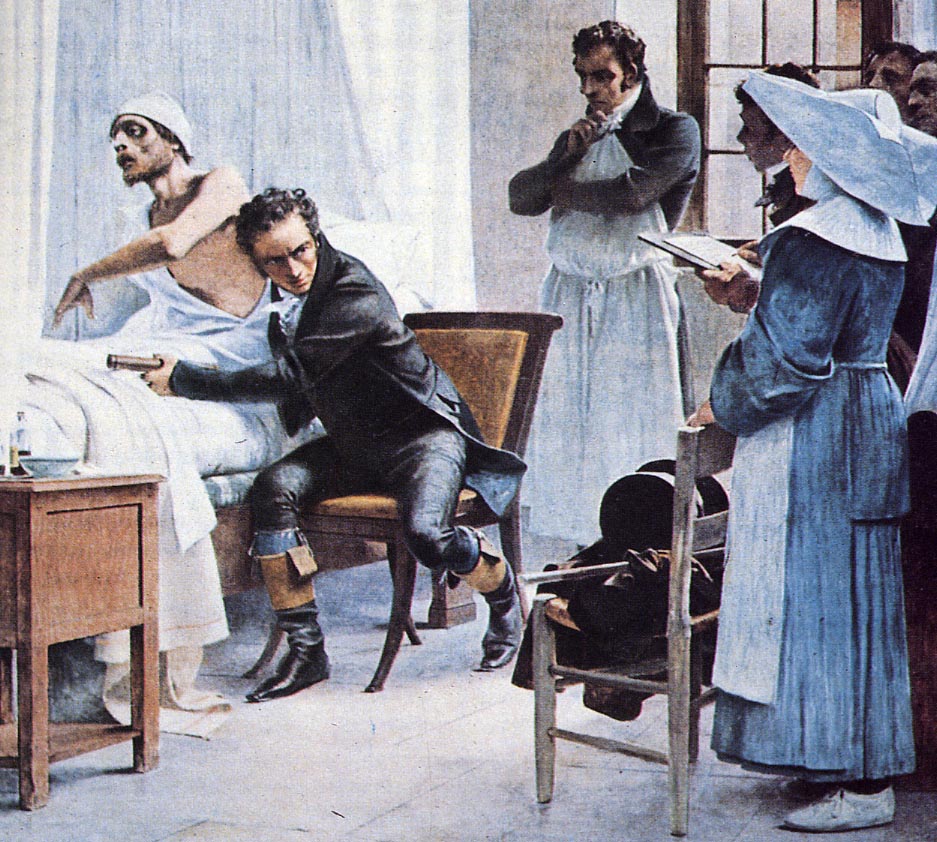
(Painting by Théobald Chartran, 1816)
(Image: Science Museum London) After the original stethoscope was invented by René Laennec.

NOT-SO-FUN FACTS ABOUT HEART

  • One person dies every 37 seconds in the US from cardiovascular disease. By the time you finish reading this blog, we might have lost another six Americans to heart disease.
  • Heart attacks happen most often on Monday mornings. A rise in stress hormones and blood pressure cause heart blockages.
  • Heart attacks peak on Christmas Day, Dec 26th and New Year’s.
  • Your heart works twice as hard as the leg muscles of a sprinter. So do take care of your heart and give it a lot of love.

Source(s): https://www.unitypoint.org/livewell/article.aspx?id=20b07ab0-e855-49c6-9ee2-91247e52d5cc

Featured image: designed by Freepik.
Mental Health on Campus

Standard

By Dennis Austin

College marks an important period in a student’s life. As students begin to transition into adulthood, college is a playground of sorts, a place where experimentation, deep thought, and pondering on what lies ahead are all on the menu. Some students define their college experience through partying, sexual exploration, intense academic rigor, or a combination of sorts. However, for many students they are not in the least concerned with these activities as their energy is more focused on getting themselves out of bed, dealing with an anxiety attack or flirting with the idea of suicide.

Over the past few years mental health has become a hallmark on college campuses across the world. More attention and resources have now been dedicated in assisting students who struggle with their internal demons, which for many, is a case of life and death. Here at Genesee Community College, there is a noticeable sense of despair which afflicts much of the student body. I myself have seen people in my own social circle openly admit to cutting themselves, failed suicide attempts, amongst many other tragic stories. One student in particular had cut themselves multiple times in their abdomen, an event which required an overnight hospital stay.

Earlier this month at the behest of GCC President James Sunser, me and College Village Resident Assistant Randy Bumbury, visited Monroe Community College and advocated for more resources on campus to deal with this crisis. In a room filled with State legislators across various regions we plead our case as to why this issue requires urgent action. Jeanie Burdick is a fine counselor here at GCC and has performed her job well, but she is only one individual. Given that our estimated student population is well over 1,000 (more if our campus centers and distance learning students are calculated), there is simply not enough resources available to address the needs of students.

To be blunt, we need money. Monetary backing would ensure we could afford more than one full-time, qualified counselor as well as expanding our services at the Counseling Center. Thus, GCC could provide more options for students to better manage their health outside of what currently exists, such as Therapy Assist Online, a useful tool students can use, but doesn’t completely solve the problem. The issue we have is not a lack of motivation or skill. That much among faculty is present. We just don’t have the “cache” if you will, to go beyond our constraints and truly make a difference.

Dennis Austin is a graduating sophomore, majoring in Liberal Arts & Sciences. He is graduating this semester and will be attending the University of Illinois in January.

If you or someone you know is struggling with mental health issues, please contact the National Suicide Prevention Lifeline at 1-800-273-8255 or dial 911. If you need to make an appointment with our Counseling Center, please contact Jeanie Burdick at jlburdick@genesee.edu or call (585)-343-0055 ext. 6219. The Counseling Center is open weekdays, Monday-Friday, from 9 AM to 4:30 PM.

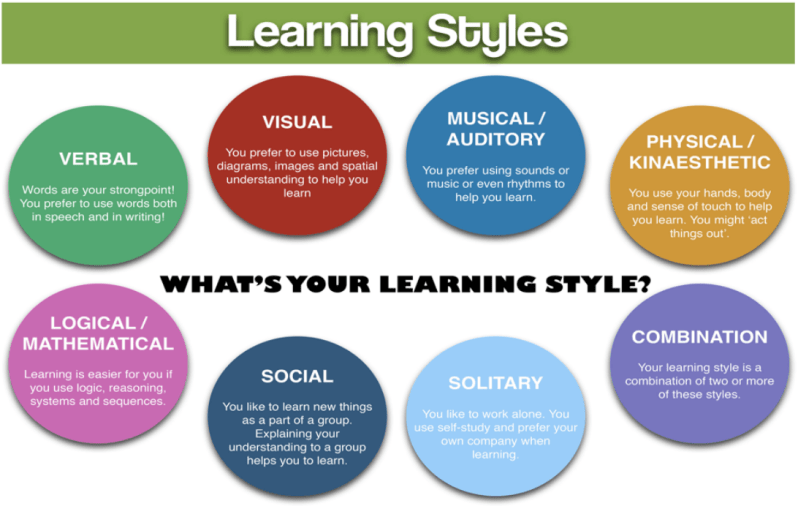
Does Learning Style actually exist?

Standard

I am a skeptic at heart and I accept nothing at face value. I have always been the ultimate truth-seeker. I love slaughtering a sacred cow with facts, logic and peer-reviewed evidence. Just because the vast majority of people hold a particular belief it does not make it true. Remember at one point we all used to believe that the earth is the center of the Universe or the earth is only a few thousand years old. No amount of belief/faith makes anything true. Wise people change their deeply held belief with new information. I always wondered if learning style actually exist and if I am wasting hundreds of dollars every semester paying for software and companies to figure out my learning style. Then, my favorite history instructor showed us a TedxTalk video on “Learning styles and the importance of critical self-reflection” by Dr. Tesia Marshik. Dr. Tesia Marshik is an Assistant Professor of Psychology at the University of Wisconsin-La Crosse. Please watch the full TedTalk video and check the peer-reviewed scientific study I cited here before rejecting the fact that learning style actually does not exist.

I will quote Dr. Tesia here. “The belief in learning styles is so widespread, it is considered to be common sense. Few people ever challenge this belief, which has been deeply ingrained in our educational system. Teachers are routinely told that in order to be effective educators, they must identify and cater to individual students’ learning styles; it is estimated that around 90% of students believe that they have a specific learning style but research suggests that learning styles don’t actually exist! This presentation focuses on debunking this myth via research findings, explaining how/why the belief in learning styles is problematic and examining the reasons why the belief persists despite the lack of evidence.” Furthermore, Dr. Tesia explains to us that learning is the same regardless of how the content is presented to you. Most of what you learn is stored in terms of meaning. The best way to learn or teach something depends on the content itself. Suppose if you need to memorize and identify how different insects look like then the best way to learn that is to photos of different insects. Now if I ask you to memorize the sound of different insects then the best way to learn would be to hear the sound. It is not because you are a visual or auditory learner. Many things can be taught using multiple senses.

Another peer-reviewed scientific research concluded that “there is no adequate evidence base to justify incorporating learning styles assessments into general educational practice.” Lastly, Dr. Tesia states reasons we must stop believing in learning styles. It is a waste of time and valuable educational resources. Teachers already have an enormous task of accommodating all students of different backgrounds, abilities, disabilities, motivations, and interest. The fact that learning style does not matter should be a relief for teachers. It is one less thing teachers need to worry about. The US colleges can no longer afford to waste time and resources trying to promote learning style when there is no evidence that it actually helps to learn. Especially, when there are other research-supported strategies that do impact learning. Moreover, labeling yourself as a particular learner can be dangerously misleading. It prevents you from thinking outside the box and trying out other strategies. The fact that learning style actually does not exist should be a good news. It means we are all capable of learning in a variety of ways. We are not as limited as we think we are.

I hope you all will examine and question your belief about learning styles after reading this blog post. Happy learning!

Image taken from https://bonniegillespie.com/is-your-learning-style-the-problem/

My most favorite online classes at GCC

Standard

I have taken several online classes at GCC like Philosophy, Sociology, Medical Terminology and hybrid classes like Microbiology and Anatomy and Physiology. However, my most favorite online class at GCC was HIS-104 and HIS-101 taught by Judith LittleJohn.

In fact, Judith Littlejohn is one of my most favorite instructors at GCC because she is very pro-science, progressive and is a scientifically literate humanist like me. She is the only online instructor I had so far who actually incorporated activities to make sure students are questioning their study habits and learning new study habits. She is also the only instructor to actually offer weekly check-list for all the assignments, tests and quizzes that we have to complete and how much time students need to assign each week for a certain quiz, assignments, research paper and discussions. Her weekly checklist helped me to organize my schedule very efficiently.

I am about to graduate from GCC. I have taken countless classes at GCC and I have written what feels like thousands of research papers. Research papers carry a lot of points and research papers decides whether you will pass or fail a class.
I never had an instructor before who made it mandatory for all students to submit a rough draft for their research paper. In fact, my instructor broke down the research paper into topic and thesis statements for one week, outline for another week, rough draft for another week, annotated bibliography for another week and lastly, the final research paper is due at the end of the semester. You need to complete all the requirements- topic and thesis statement, outline for a research paper, annotated bibliography and rough draft each week separately in order to receive credits. Only then, you can submit the final research paper.

Previously I have taken classes, in which the majority of the students wrote the research paper all by themselves and the monumental task of writing a research paper was not broken into several stages. As a result, a lot of students ended up getting very low grades. Sometimes, instructors were generous and gave students one more day to correct the research paper and to re-submit it again for a better grade. It takes months of research and brainstorming to write a good research paper. One day is simply not enough to correct a research paper. Last minute rush only creates chaos and confusion.
That is I why I like Judith LittleJohn’s teaching style of breaking down the final research paper assignment.
HIS-101 and HIS-104 are also the only classes I have taken at GCC that offer halftime survey. Students earn extra credit for completing the survey. Students can communicate their progress and concerns in the middle of the semester anonymously through the survey. In other classes, I have seen students dropping out or withdrawing from a class. I believe all classes should offer half-time surveys to students to communicate their disappointments and progress to their instructors anonymously in the middle of the semester. Assignments and tests usually get more difficult during the middle of the semester.

Meta cognitive café discussion offered by HIS-101 and HIS-104 classes are also very useful and all classes should offer that. I learned the Pomodoro technique and other learning habits. I also got to see a Ted Talk video on whether we actually have a learning style. It is not only important to teach students what to study but how to study. Teach students how to think not what to think. The study skills I have learned HIS-101 and HIS-104 are invaluable and will be useful to me for the rest of my life.

How I saved hundreds of dollars in the cost of living in the US as an International student.

Standard

For the last one year, I did not pay a dime for heat, electric, garbage pick-up, laundry and gas without any roommates. I am successfully graduating from GCC this fall and I managed to do it by saving hundreds of dollars in the cost of living. Most Americans and International students alike, stare at me in disbelief when I tell them that I pay nothing for utilities and I managed to do so without a roommate. Do I sound too good to be true? I certainly do. Let me show you how I made frugal living a reality in this outrageously exorbitant economy. According to a news report by the national low-income housing coalition, a full-time minimum wage job won’t get you a one-bedroom apartment anywhere in America. A lot of one bedroom apartments in Batavia range between $500-650 plus you will have to pay for heat, electric, Internet, phone bill and fuel separately.

I have spent the first one year at GCC building friendships. I have spoken with everyone and I got to know everyone around me. I am a keen observer of people around me and I am a pretty decent judge of character. It did not take me long to figure out people who would be genuinely helpful to me. I like helping people as well and I am usually extra kind and respectful to elderly folks. I live away from my parents and whenever I come across an elderly person I suddenly miss my parents. South Asian children like me usually live with their parents until their parents pass away. South Asian culture also emphasizes a lot on family values. Very quickly, I got to know a lot of elderly folks with empty houses in Batavia and Oakfield because their children moved out. Many of these elderly, soon to be retired folks were impressed by me and offered me to live in the basement of their large, empty houses to pay off their mortgage. It did not take me long to figure out that it is way cheaper for me to lease one bedroom and bathroom space in a large empty house, instead of, leasing a whole apartment. I pay only $500 for rent without any roommates. Electric, heat, laundry, garbage pick-up and everything else is included with it. I do not deal with electric or fuel companies at all.

I know a lot of International students who pay $300-400 for off-campus housing but they are forced to put up with roommates and additionally need to pay for heat, electric and other necessities separately. On-campus housing is extremely expensive and if you are like me who is not at all interested in dealing with roommates, residential assistants then, yes, off-campus housing is for you. Some International students almost get free on-campus housing if they choose to be a residential assistant on campus. However, all students do not get the job of being a residential assistant. International students also do not get financial aid from the US government to live on-campus. Personally, the job of being a residential assistant and dealing with on-campus drama never appealed to me. Never mind, how much you dangle the offer of a free on-campus housing to me. I simply refuse to have roommates. Hence, I never considered applying for a residential assistant job.

Leasing a basement or a separate unit in a large, empty house with no children is the best way to save money on the cost of living, instead of, renting a separate house or one bedroom apartment all by yourself and being responsible for your own heat and electric. I live in a basement of a large house with my own kitchen, bathroom, study room, and bedroom. I have a nice backyard and parking space as well. I almost never see my landlord who lives upstairs. I have my own separate entrance. There is no way I would be charged a separate electric or heat bill as there is usually only one meter per house. However, be respectful. Try to conserve energy and heat. Do not abuse anybody’s generosity and trust. I keep all my lights off when I do not need it and I use as little water as possible. Do not tamper or raise the thermostat. You certainly do not want to upset a landlord who is willing to pay for your heat, electric, garbage pick-up, and laundry.

Thus, the moral of the story is to be nice to people in general. Do not pretend to be nice to people just because you have an ulterior motive. People will quickly realize your motive and turn away from you. If you want to successfully live in a place for a year or two like me, then focus on building a good relationship with your landlord. Good behavior will take you a long way in life. Do a background check and make sure you really know the person you are living with. You will definitely come across good-hearted people who will offer you almost free-housing or housing at a lower cost. I am graduating this fall from GCC and I am moving to another state. I will be a house-aide at an elderly person’s house and I will be paying nothing for rent, electric, heat, garbage- pick up and other expenses. Now, I have decreased my cost of living from $500 to zero dollar. I repeat again, “Be nice to elderly people!”

Read this before you register for a class!

Standard

I have taken a lot of classes at GCC and I have learned a thing or two from my mistakes. I wish there are things I would have done before registering for a class, costing hundreds of dollars. Instead of, leaving important decisions and consequences of signing up for a class to fate!  Spring Registration begins October 1st.

  • Speak with your Academic Advisor and Success Coach

You might think it is a hassle and a waste of time to schedule an appointment to meet with your advisor and success coach but trust me it is important to meet with both the academic advisor and success coach. This is, especially true, for International students. You will be wasting a lot more time and banging your head in frustration when your advisor messages you that you did not sign up for the right class. Meet with your advisor even if you know your degree requirements because you can find a lot more information about your future classes, instructors who would be offering your classes and other academic activities. Your advisor and success coach also have a wealth of other resources that can help you. Message your advisors if you have any questions or if you are too busy to schedule an appointment to meet in person.

  • Meet with the Instructors in person before you sign up for a class

It is extremely important to meet with the instructors in person before you sign up for a class unless you want to be miserable for the rest of the semester and waste hundreds of dollars and your valuable time. You will get an idea how your instructor is when you meet with them in person to discuss their class requirements and expectations. A lot of students are excited to sign up for a new major or class. However, they are quickly disappointed and surprised when they do not like their instructors after they start a class and are half-way between the semester and it is too late to drop the class. Hence, they are stuck with an instructor and a study style they do not like. There are several instructors offering the same classes. Pick the instructor with whom you best get along. Ask your instructor how and why certain students perform poorly in their class. Your instructors can give you valuable advice to ensure your success.

  • Read the description of classes online before you sign up for a class

Carefully read the description of each class before you register for these classes. Check how much time you need to spend on each class before you sign up for additional classes. International students with no financial aid must purchase their books ahead of time during winter and summer break. Double-check what other additional materials you will need for a certain class. Try to use Schedule Planner to organize your time and classes.

  • Speak with students who have already taken those classes with a certain instructor

Students who have already taken classes that you are about to take are a bundle of resources that you must utilize. However, do not be persuaded by the opinion of just one student. Speak with multiple students, including students who have dropped the class. Learn from the mistakes other students have made.

  • Check if you accidentally qualify for another certificate

A lot of classes and degree requirements are very similar. For example, both the Nursing Program and Respiratory Care program have similar prerequisites. Health studies certificate and child care certificate have similar classes. You may have to take one or more additional classes to earn another certificate. Hence, carefully select your classes. Additional certificates can boost your resume.

May the force be with you!  Happy Spring Registration!


Fundraising for GCC Respiratory Care Club

Standard

I am a sophomore at GCC and one of my majors is Respiratory Care. I am raising funds for the GCC Respiratory Care club by selling holiday chocolates, holiday gift tags and wrap. Healthcare majors are very expensive. Hence, GCC Respiratory Care club helps all respiratory care students to pay for some expenses like CPR certification, mock exam cost, three days’ review sessions, board preparation, trips for conferences, pinning ceremony and poster presentations.

All the money raised by GCC Respiratory club will be spent on the students. America needs more respiratory therapists. So, please help us to raise funds. I am sure most of you will buy chocolates and holiday goodies for your friends and family. I would highly appreciate if you buy some goodies from me as your valuable money will be used to help students. I am proud to announce that GCC Respiratory Club has partnered with “Niagara by Frey Premium Chocolates” to help students. “Niagara by Frey” is a leading fundraiser for countless schools and organizations in Western New York.  “Niagara by Frey” is an all American brand famous for making delicious chocolates and other goodies.

Some of the items that we are selling are:

  • Milk Chocolate Sponge candy $14.00
  • Orange Milk Chocolate Sponge Candy $14.00
  • Dark Chocolate Sponge Candy $14.00
  • Chocolate covered Pretzels $11.00
  • Pecan Caramel Clusters: $10.00
  • Cashew Caramel Clusters $10.00
  • Almond Butter Crunch $10.00
  • Peanut Brittle $15.00
  • Chocolate covered Oreo Cookies $14.00
  • Chocolate Raspberry cups $12.00
  • Peanut Butter cups $12.00
  • Chocolate Caramels $12.00
  • Chocolate Truffles $12.00
  • Chocolate Rounds $12.00
  • Milk Chocolate Miniatures $15.00
  • Holiday golden trees wrap $9.00
  • Red Stripe Wrap $9.00
  • Light bulbs wrap $9.00
  • Santa Claus is coming to Town wrap $9.00
  • Holiday gift tags $5.00

There are coconut clusters, raisin clusters, almond chocolates, chocolate Biscotti Prato, teddy bear, Santa, nutcracker, holiday foiled novelty assortment, chocolate sports car, ornaments, tool kits, dino eggs, various kinds of crème d’ Orange and chocolate locomotive, motorcycle and fire engine. If you want to see the holiday fundraising catalog, then please feel free to contact me. My email address is zfiroze@my.genesee.edu You must order by 26th October, 2018 if you are interested to help GCC Respiratory Club to raise fund for student expenses. Product delivery date is on 30th November, 2018.


Come one, come all! Housing Survey!

Standard

housing batavia

Hey y’all! It’s time to participate in something. Let your voice be heard in this online survey. Basically, it’s a survey given by Genesee County and they’re trying to decide what type of housing and additions to add to Batavia!

If you or someone you know would like to participate in helping the town of Batavia develop and grow, please fill out this short 11 answer questionnaire given in the link below. It has to be in by the 17th of November.

https://www.surveymonkey.com/r/XZBVSXP

Thanks and have a great day!

How to Travel on a Budget

Standard

Everyone wants to get out and about every now and then. There’s nothing wrong with that! Somehow, getting out of your humble home to travel and experience new things makes you feel more at home when you finally get back. Stronger social skills, feeling more at peace, and becoming more creative are all linked to people who travel. With that being said, if you have the time, do it! Go see some stuff and come back feeling fresh and rejuvenated.

If money is an issue, take my blog as a survival guide to traveling on a budget. Lodging, food, and transportation can all be calculated to make an affordable trip.

First – Place to stay…

Try www.airbnb.com to find someone who is renting out their home for the duration of your trip! It’s definitely better than staying in a hotel and cheaper too! Since it’s someone’s home, you’ll be able to use their kitchen! – which goes into my next topic.

airbnb

Food – what to eat and how

Since you’re getting to live in a home you found on Airbnb, try cooking most nights! To learn how to cook like the people of the place you’re visiting, consider taking a local cooking class to buff up your skills.

Silverado-Cooking-School-cooking-classes_3


Transportation

This is a little tricky. If you’re in the US, try either renting a car, bringing your own, or taking the public transit! When I lived in Vegas, I didn’t have a car, so I used the bus. It was only $5 to ride all day! Many cities have this option, you just have to do a little research.

public transit

Shopping

When you’re out on the town shopping, I suggest buying goods from stores that you don’t have back home. The point of traveling is to see new places, so the material you accumulate should reflect the uniqueness of the place you visited.

shopping

If you’re ready to get out and about, you should! There’s no reason you can’t do something like travel. Our planet is home to all of us, so we should feel like we can visit it whenever we want!

Exciting new Public Speaking workshop on Wednesdays!

Standard

Do you or someone you know have trouble speaking in front of an audience? I know I do! We are now in luck! Come get over your public speaking anxiety in the Student Success Center (G200) and finally get a handle on presenting. 

DSC_8400[1] (1)

What to bring :

  • Bring your presentations/notes in electronic or paper based projects.


What to expect :

  • Expect to share your presentation as a group or talk one-on-one.
  • Get free and friendly feedback
  • Polish your public speaking, interview skills, “elevator speeches”, and project presentations
  • No sign ups needed!
  • Open dialogue format


DSC_8402[1]When :

  • Wednesdays (3-5PM)
  • October 18, 25
  • November 8, 22, 29


If you have further questions please feel free to contact the lady in charge. 

  • Kate Trombley
  • Email: kbtrombley@genesee.edu
  • Phone: 585-343-0055 ext 6285


With this workshop available, there’s no reason you should have trouble presenting in front of your class. Take advantage of the resources given to you and watch your own garden begin to flourish!

DSC_8404[1]