By Sindhu Priya Kondapuram, GCC Fashion Business Student
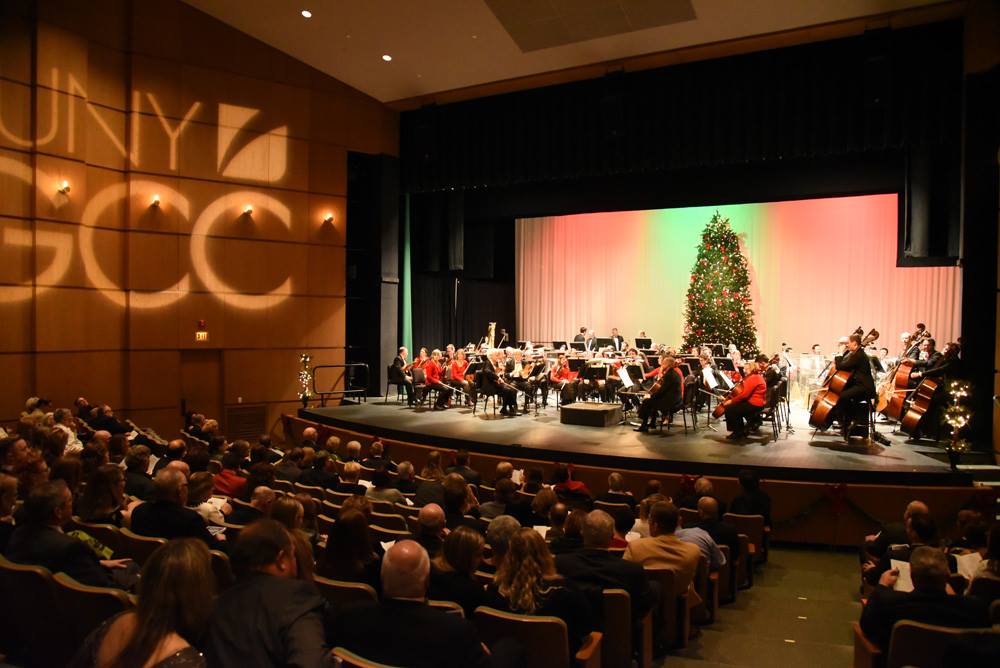
In the spring of 1991, Genesee Community College Foundation hosted “A Star is Born” event to celebrate the opening of the Stuart Steiner Theatre. The event was so successful, many attendees commented “The Foundation should have an encore of this event” – and thus Encore began. For the past 32 years, Encore has been celebrated at Genesee Community College and is one of the premiere holiday events in the Genesee County region
Encore is the largest annual fundraiser of the Genesee Community College Foundation. All proceeds from this event go directly to student scholarships at Genesee Community College. Encore brings together numerous college and community leaders, business organizations and donors committed to our students and our future. This year’s event theme “White Christmas,” inspired by the 1954 classic film of the same name, will feature an elegant evening of holiday music and fine dining.
Encore is an elegant gala that has enjoyed a long history in our community. Many attendees return annually to support this event and being their holiday season! Again, all proceeds go directly to support student scholarships at Genesee Community College. Encore also strives to support local businesses and talent in our region. We often engage with local businesses for services such as catering, entertainment, printing, etc.
Founded in 1985, the Genesee Community College Foundation is a not-for-profit organization dedicated to providing service and support to the College. Throughout its many initiatives and programs, the Foundation is steadfastly committed to inspiring students to succeed academically, and help them become active, contributing citizens of our community. Led by a board of directors, the Foundation continues to make students scholarships its highest priority. Foundation scholarships recognize talented graduates from our local high schools, motivate enthusiastic working adults to return to college, and assist many students who are facing economic hardships that may prevent their academic attendance.
Due to the increasing number of campus closures of universities/colleges as the result of COVID-19 outbreak, several companies have begun to offer short-term resources to support students’ urgent needs and ease their transition to distance-learning.
When: Tickets must be purchased by March 22, 2020. Travel is valid Monday through Thursday, and Saturdays through May 31, 2020, for round-trip domestic nonstop travel within the continental United States
How: one student can fly free for every one-way or round-trip Discount Den Fare purchased on qualifying flights and dates using promo code. Carefully read their details & restrictions here and here before booking flights
Who: for households with children in grades K-12 or in college who do not already have a Spectrum broadband subscription at any service level up to 100 Mbps
When: starting Monday, March 16th
How: Families can call (844) 488-8395 to enroll. Installation fees will be waived for new student households
This 30 days free self-storage offer is typically offered to communities impacted by a natural disaster. This is the first time U-Haul has extended the offer Company-wide. “More and more universities are giving instructions to leave campus and go home. Students and their parents are in need of moving and storage solutions. We have the expertise and network to help, and that’s exactly what we’re going to do.” said U-Haul president John Taylor.
Who: new customers with college IDs, subject to availability
When: unspecified
How: create an account at Collegeboxes.com to initiate an order. Boxes and packing supplies will then be delivered to a student’s residence. Once packed, an at-home service will pick up the boxes from the dorm or apartment at no additional charge.
Enterprise offers travel assistance to students whose colleges/universities announced closures, by waiving the young renter fees for rentals and reduce the age minimum
Who: College Students 18 – 24 years of age
When: until May 31, 2020
How: book online at link above
Of course, there’s no point in utilizing those distance-learning resources without doing the basics – protect yourself and others from the infections.
How: wash hands with soap for at least 20 seconds, routinely clean all frequently touched surfaces with disposable gloves, wear masks. Here’s a great reminder if you are young and unafraid of the coronavirus.
Share with us any other helpful resources that you know of to help other students, too!
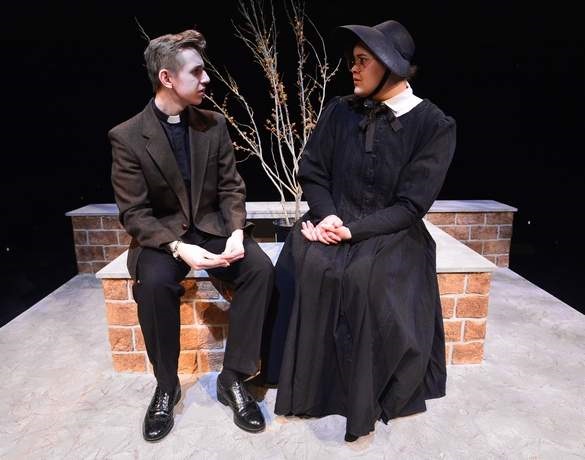
Samuel Rigerman is a freshman enrolling in Business Administration, with a dual certificate in Musical Theatre at GCC. Doubt: A Parable was his 17th theatre production so far, having participated in 9 shows during high school and a few other at Harvester 56 Theatre and Rochester. Last semester (Fall 2019), he portrayed Brad Majors in the Richard O’Brien’s musical The Rocky Horror Show. at GCC’s StuartSteiner Theatre.
(You can read a summary of Doubt: A Parable here.)
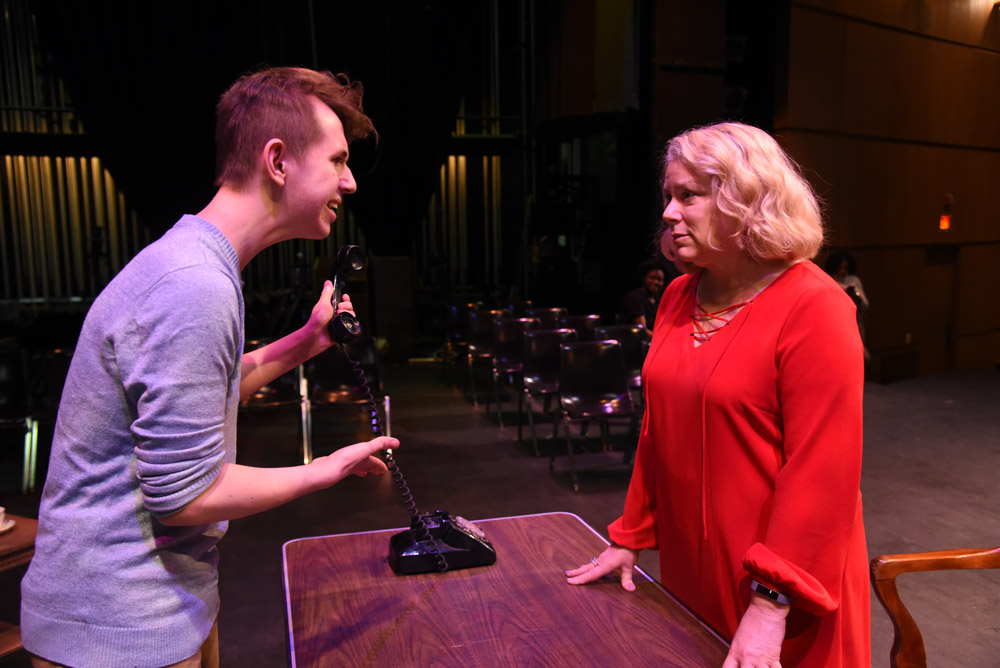
Sam Rigermand and Lucine Kauffman as Sister Aloysius during rehearsal.
For an actor, auditions are always nerve-wracking, “especially with this show, I really wanted to work with director Marianne because she’s an amazing director and this would probably be my one-and-only shot at this time. So I really did all my homework to maximize my chance of getting the role.”
In preparation for the role of Father Flynn, Sam went to different Catholic Churches to watch prescript sermons, “some of the sermons were really boring ’cause they weren’t very good at delivering it, but I learned a lot and took away what I want or did not want in my sermons to apply my own tweaks to Father Flynn’s sermons.” He added, “to prepare for the storytelling section of the Father Flynn’s first sermon in the play, I sat in at the local Richmond library and listened to the women there reading stories to the kids. I tried to learn how she relates to the kids, projected the story so I can take that into my sermons and differentiate between story telling and giving a sermon.”
Some of his difficulties during rehearsals were delivering sermons, where he had to act as if there’s an audience listening when there is no one. The cast didn’t have a real audience until the first performance. “I also struggled a little with the second scene where Father Flynn teaches basketball to the kids, two things of which I don’t know how to do: playing basketball and talking to kids.
He said he also loved the intense scene between Father Flynn and Miss Aloysius. They were verbally battling each other back and forth: Father Flynn criticizes that she has no evidence, but Miss Aloysius is so adamant that she has him cornered and he just trying to get away from it. Sam added, “I love the actress Lucine Kauffman who played Miss Aloysius, she was so fun to work with. We created a bitter connection and really made the scene our own.”
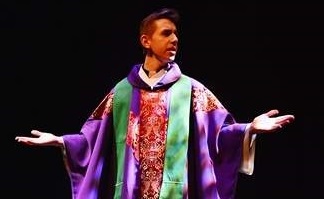
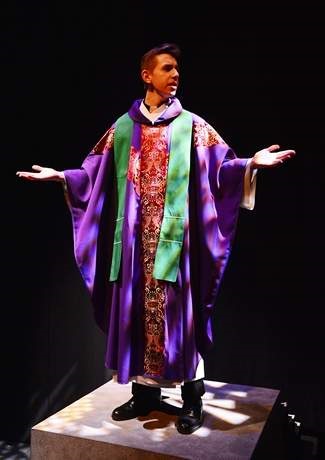
(Photo: Mark Gutman / Daily News) Sam Rigerman as Father Flynn during his first sermon.
On deciding whether Father Flynn was innocent, Sam explained, “After I was cast, director Marianne told me to craft a ‘Who Am I’ statement. It took me a very long time to decide that Father Flynn was innocent. I had to keep reading the script, dig for different clues and find little things that indicate ‘Oh, he did do it’ ‘Wait no, he didn’t do it.’ I kept building on the clues, I finally concluded that he did not do it, and I acted throughout the show with the mindset that Father Flynn is innocent.”
“My reasoning for his resignation after hearing Miss Aloysisus ‘s threat is that he might have had a dark history that he does not want to be revealed. So he simply withdrew and transferred to avoid any further troubles, but he is innocent regarding matters with Donald (the kid suspected of being abused by Father Flynn)”
Sam’s analysis and portrayal of Father Flynn’s character partially correlates to his own personality, “I try to see the good in people, and the same goes for character Father Flynn. Even when someone is accused of something, I’d try to think of a possibility that they didn’t do it. I am aware that such horrific incidents of sexual misconduct have been brought up / revealed over the past 50-60 years in Catholic Churches, which is really hard to process.”
“If I were to play the character again, I’d still portray him as not guilty, but it’d be interesting to pursue the role in the opposite direction, that he is guilty and being manipulative toward sister James. But I would definitely have discomfort portraying him as guilty because it’s a very real and horrible incident that kids are subjected to at such a young age.”
Contrasting his portrayal of Father Flynn in the show versus Philip Hoffman’s portrayal of Father Flynn in the 2008 film, “I think Philip Hoffman portrayed Father Flynn as guilty. But for my portrayal, I wanted the audience to walk away with their own inner conflict of did he do it or did he not do it. One of the great things I think we succeeded at was that people walking out of our show not knowing if he did it or not. That’s the whole point of the show, that you’re filled with doubts about him.”
(Photo: Mark Gutman / Daily News) Sam Rigerman as Father Flynn and Alyssa Young as Sister James
Of the two production he had done so far this year, Rocky Horror and Doubt, Sam feels more attached to the production of Doubt and character Father Flynn, “Rocky horror was a lot of fun with many great musical scores, but Doubt, for me, was much more personal, especially when the cast was so close to the audience who sat on stage watching it. I am more attached to Doubt because the plot is real, it’s based on something that realistically happened in real life.”
Through Doubt, he was able to learn and apply many new techniques on character development and analysis, “Unlike character Brad Majors I played in Rocky Horror Show where the single-dimensional character only had one goal: being terrified and trying to get out of the Frank-n-Furter house, Father Flynn in Doubt is a more complex character where he pursues different small objectives in each scene to serve a bigger one. With Doubt, I learned more in-depth about creating a character and analyzing a script by finding the operative word, breaking down each of my monologue/scene into beats of action, I didn’t have to do that for Brad in the Rocky Horror.”
(Photo: Facebook) Sam Rigerman as Brad Majors and Runo Suzuki as Janet Majors during The Rocky Horror Show
Summarizing his experiences here at GCC so far, Sam shared that his favorite theatre course was Theatre 103 – Fundamentals of Acting, taught by Instructor Maryanne Arena, who was also a co-director of Doubt along with her daughter, Jamie, who teaches theatre at Geneseo College. “We learned about audition techniques, character development and a ton of super fun improv games, which is something I didn’t learn from high school theatre or community theatre. I also love my business courses, especially BUS 101 & 213, because Instructor Lauren Paisley of both of those courses is an awesome teacher. “
“I initially chose GCC because it’s close to home, it’s affordable and I can still stay at my job at Starbucks. Another major factor was because I auditioned for and was cast as Brad Majors, one of the lead roles, for Rocky Horror show last May when I was still in high school, so I decided to come here.”
What’s next for Sam? He’s preparing for the play Jack and the Beanstalkin this upcoming May and still has another year with GCC until his graduation in Spring 2021. “After GCC, I plan on transferring to Geneseo College or Colombia University with a BA or BFA/MFA, definitely with theatre component attached with it. My dream job is acting, but if that doesn’t work out, I will pursue a career that connects social media and theatre.”
Little fun facts:
The original set design planned that Father Flynn would be giving his sermons among the rows of audience off-stage, instead of on-stage where Sam was standing, but that didn’t work out so the audience sat directly on stage.
For his character Father Flynn who had long nails, Sam, who had never worn fake nails before, wore and kept on long acrylic nails everywhere he went (to class, to rehearsals…) the weeks before the performances.
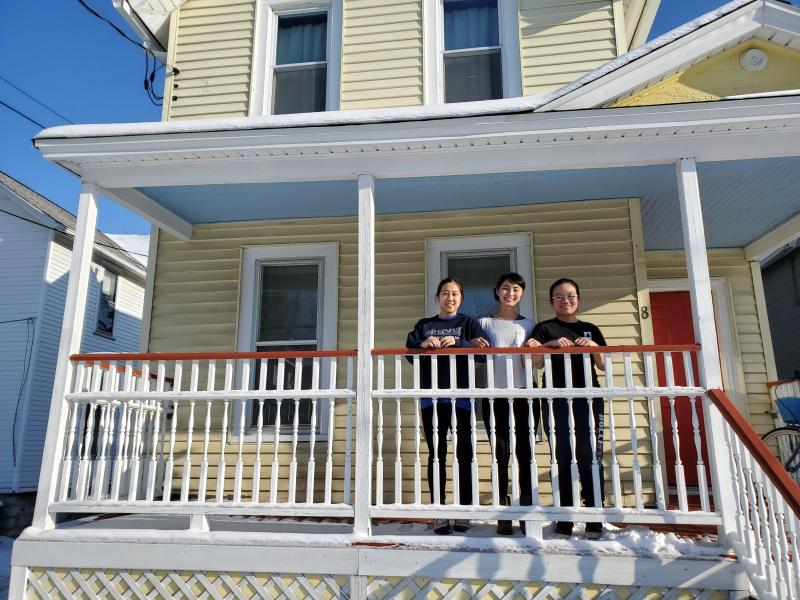
Let me start off by bragging a little about the off-campus house I’m renting and living in. It is a newly renovated and furnished house near downtown, close to conveniences and grocery stores and near Batavia’s bus line with affordable rent. The house was bought and renovated by a GCC alumna, Yuki Sasao. After graduating from GCC in 2014 with an Associate Degree in General Studies and Business Administration, Yuki, who was then an international student from Fukuoka, Japan, went on to obtain her Bachelor in Accounting from SUNY Oswego and is currently working as a CPA at Deloitte in Portland, Oregon.
So what’s the big deal about an alumna buying a house and leasing it to the younger students, you ask? Yuki doesn’t treat her student renters just as tenants, but also as her mentees. Yuki aims to provide support and counseling in academic, career development and cultural differences. This past November, Yuki strongly advised us to attend the Boston Career Forum and offered to pay for our two-night hotel stay so we can confidently dip our foot in the job hunting and professional networking event. Boston Career Forum is the world’s largest job fair for Japanese-English Bilinguals. Even though I didn’t join, two of my housemates who are Japanese international students learned some business dress-up, networking etiquette and even scored a few interviews with recruiters during the event. During finals’ week, Yuki sent us care packages overflowing with warmth (candles, socks) and sweetness (sugar canes, chocolates, gummy bears, …) to aid us through the stressful time. Yuki often holds International Student Workshops during school breaks (Spring Break, Winter Break) to discuss her experiences navigating the US job market and the struggles uniquely encountered by international students that she admittedly learned the hard ways.
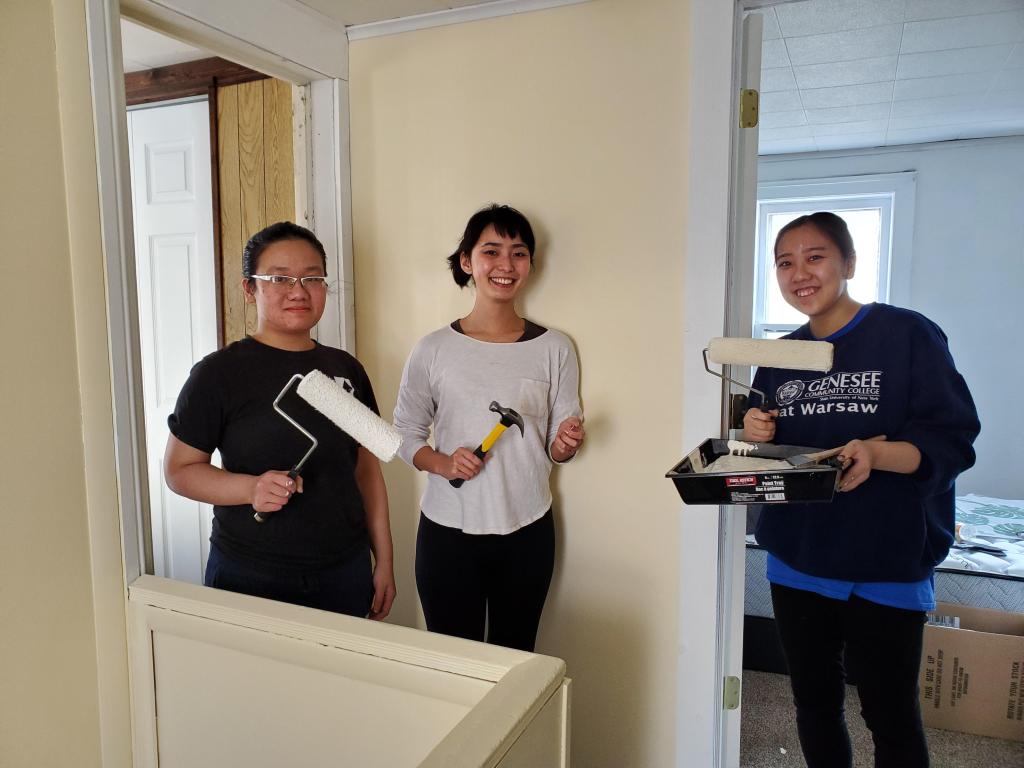
Specifically with her newly bought house in Batavia, Yuki intends to create a homey living environment for her student tenants, instead of just a house to stay in. “I’d be really sad if you guys just sit in your own room all day and not hang out together in the common space,” Yuki shared as she was putting up floral wall stickers in the living room. As a handy and crafty person, Yuki loves home decor and possesses a wide range of household repair and maintenance skills which she learned through volunteering for Habitat for Humanity during undergraduate years. During this Christmas break, Yuki visited Batavia to further renovate the house with wall stickers, decorative lightings and repaint several rooms in the house. I picked up a little knowledge in painting and drilling while helping her out, too.
Room painting during Christmas break!
At first, I thought Yuki bought a house in Batavia because she will be retiring here or will have some personal future plans with it. But I slowly realized the house and its affordable rent was set up solely as part of the support network that she hopes to provide for the younger international students at GCC, in addition to her mini career workshops and guidance. The house is also her way of helping us, foreign students, to connect and immerse in the local Batavia community. She refers to the house as Excel House Project, with hopes that her students will excel in their academic or career paths with her support. Excel House Project is her way of giving back to the Batavians and GCC community for helping her when she first set foot in America.
On December 3rd, Global Education club at GCC held a cultural event called “Hanukkah and Kwanzaa” to share with the students the different ways Jewish-Americans and African-Americans celebrate the end of a year, with free food and free books! It was the event I needed to destress during the final week of classes, especially when the dishes of delicious cookies tamed my sugar cravings.
GCC hard-working staffs feeding the students with sweet treats during finals week!
Free books!
But I swear I was not just there for the colorful sucrose, I also picked up some awareness on year-ending cultural celebrations of the Jews and Africans, and I’m not talking about Christmas.
HANUKKAH (or Chanukkah)
Also known as the “Festival of Lights,” Hanukkah is an eight-day celebration inspired by a Miracle that occurred after the Maccabees successfully revolted and chased the Greek-Syrian oppressors out of Jerusalem during the second century BC. While rebuilding the (holy) Second Temple, the only remaining candle, which was supposed to last a single day, continued to flicker for eight nights and provided light long enough for the Maccabees to gather supplies. This ‘miracle’ illustrates the divine intervention of light amid spiritual darkness.
Hanukkah observers light each of the eight candles each night while the central ninth candle (called the “shamash,” means helper) is used to light the other candles. The candle holder is uniquely called ‘menorah.’ During Hanukkah, Jewish observers eat fried foods cooked in oil to represent the oil that burned the remaining candle miraculously for eight evenings (1).
Hanukkah with 9 candles on a “menorah” (a nine-branched candelabrum)
KWANZAA
Kwanzaa holiday was introduced by professor Maulana Karenga in 1966 to unify African-Americans in faith and endurance amid social and cultural unrest of poverty and police brutality.
In Swahili language (an Eastern African language spoken in Kenya, Uganda, Tanzania, Mozambique and Zimbabwe …) Kwanzaa means ‘first fruits’ or first harvest. Celebrants decorate their household with symbolic objects that reflect values of unity and gratitude for the good things in their lives and community. Kwanzaa’s seven-day commemoration surrounds the Seven Principles (“Nguzo Saba”):
Umoja – unity
Kujichagulia – self-determination
Ujima – collective work and responsibility
Ujamaa – cooperative Economics
Nia – purpose
Kuumba – creativity
Imani – faith
During Kwanzaa, a candle, representing one principle, is lit each day on a kinara. Observers would light the central black candle on the first day, then alternates between the red and green candles starting from the outer candles moving inwards on following days.
Unlike Hanukkah which is rooted in the Jewish religion, Kwanzaa is a cultural, not religious, holiday that was traditionally celebrated by African-Americans. Thus, Kwanzaa can be observed by non-Africans due to their universal values of unity and purpose, which were evident in their civil rights movements during the 60s.
Kwanzaa starts annually on December 26th until January 1st, while Hanukkah dates are based on Hebrew calendar month of Kislev, which varies between November and December of our usual Gregorian calendar (2).
Hanukkah with 7 principles, 7 candles on a “kinara” (Swahili word for candle holder).
Were you surprised to find many similarities between the two seemingly irrelevant traditions?
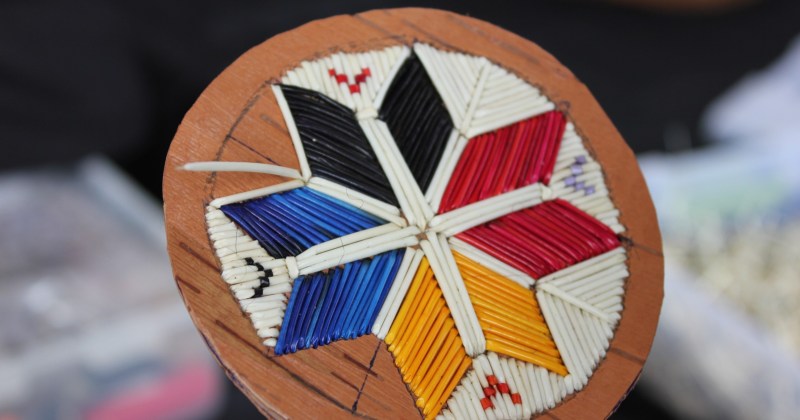
On November 26th, quill master Jamie Jacobs held a workshop at GCC to share knowledge about Native American’s lost art of quillwork embroidery. Guest speaker and Tonawanda Seneca Jamie Jacobs is a collections assistant at the Rochester Museum and Science Center. His role at RMSC includes working as an education expert on Haudenosaunee (Iroquois) culture and as an anthropological consultant documenting Iroquois ethnological collections at the Museum. He graduated from Genesee Community College with an Associate Degree in Criminal Justice in 2006.
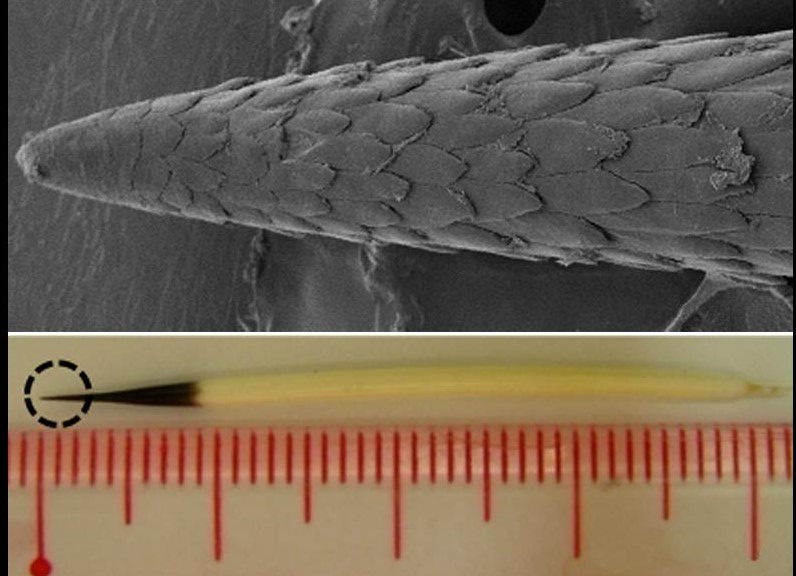
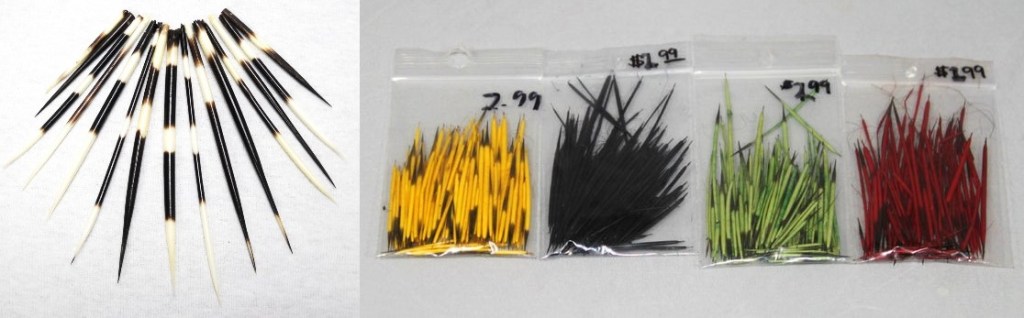
What does a quill look like when observed in close-up? A porcupine quill is a round, hollow tiny tube with a pointy end. A porcupine has around 30,000 quills on their back. So how do Native Americans obtain quills from porcupines? It’s easy to get quills from dead porcupines, but for living ones, native women had to sneak up behind the animal and throw a blanket over it. In natural defence, porcupines will raise its quills which will be stuck in the blanket. Quills are easily detached from the porcupines when touched. Like hairs, porcupines grow new quills to replace the ones they lost. Quills have sharp tips with microscopic backwards-facing barbs that clings to the skin, which make it difficult and (and slightly) painful to pull the quills out of an animal’s or human’s skin (1).
(Photo: AAAS) A zoomed-in of quills’ sharp tips and their backwards-facing barbs that make it difficult to pull the quills out of an animal’s or human’s skin.
Once obtained from the porcupines, quills need to be cleaned with hot water (to avoid diseases if quills get stuck in the skin while working), dyed and flattened. Quills are softened in warm water again before embroidery. When glass beads became widely available from Euro-American traders around the 1850s, quillwork gradually became a lost art. Due to their durability, beads were read-made, easier to acquire, easier to take care of, quicker to embroider and were available in a wider range of colors. It can take more than a year for a master quill worker to quill a shirt, but with beads, it only takes a few months (2).
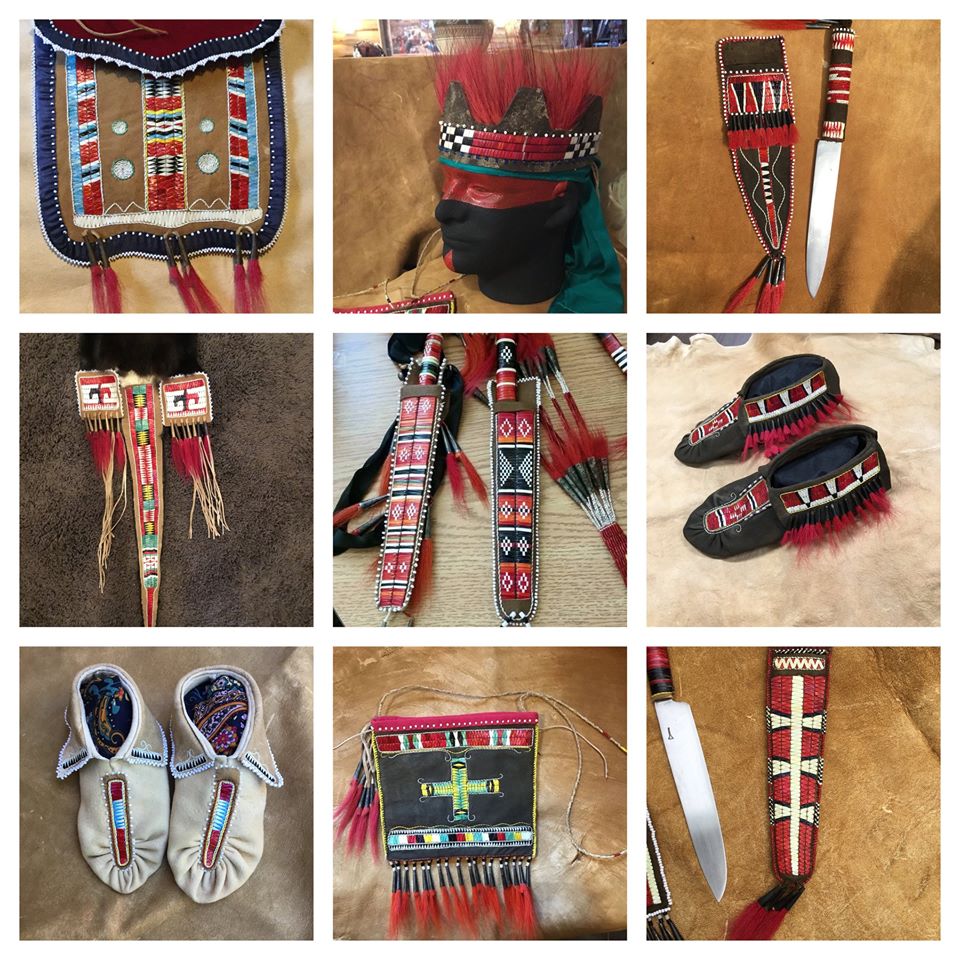
A fully-quilled purse made by a master quill artist, such as Jamie, can easily cost $1000-$2000, and they are sold out fast.
(Photo: Jacob’s Facebook) Jamie Jacob’s collection of his past quillworks.
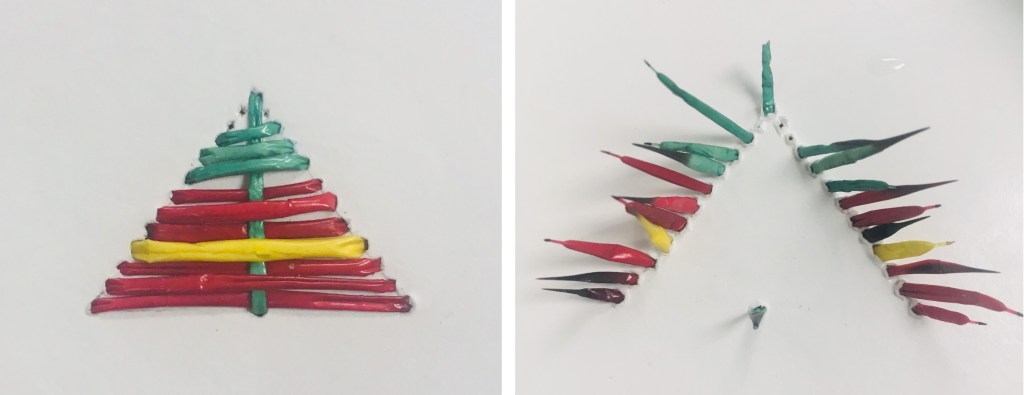
Though I was not able to create a $2000 quilled basket ready for sale during the one-hour workshop with Jamie, I did finish a tiny piece of crooked quillwork on paper and had a peek at the immense amount of diligence and time required of quill workers.
The front and back side of my amateur & crooked quillwork 🙂
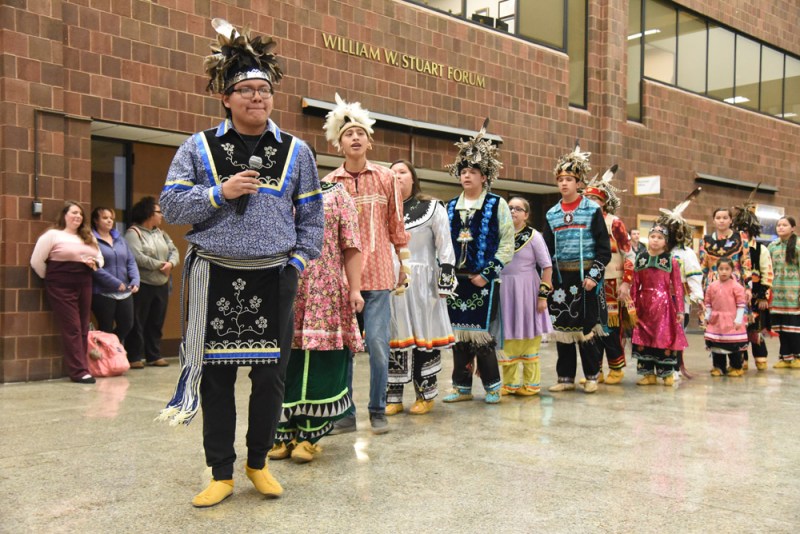
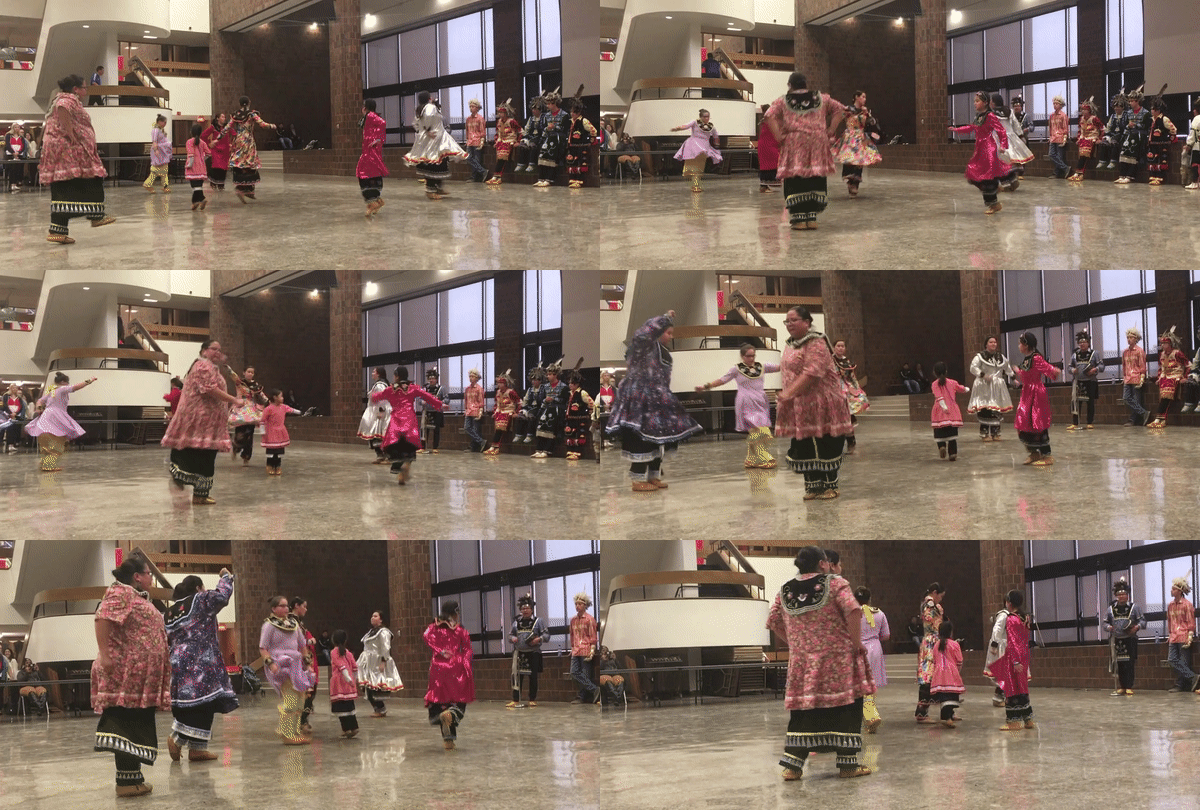
On November 21st, GCC celebrated the Native American Heritage Month with Tonawanda Seneca Nation Dancers at the Harvest Festival. It was the first time I saw a Native American social dance and their lively garments and experienced the energy brought on by the social bonds between the dancers. They even invited many of the attendees to join in their rhythms and footsteps.
Seneca was the largest of six Native American nations (the other five nations were Mohawk, Oneida, Onondaga, Cayuga, and Tuscaroras) which comprised the Iroquois Confederacy or Six Nations, a government that pre-dates the United States Constitution. As Seneca occupied the most western region of the Iroquois, they were known as the “Keeper of the Western Door.” The Seneca nation’s own name is Onödowága, meaning “People of the Mountains.” Present-day Senacas lives on three reservations: Tonawanda, Cattaraugus and Allegany, each named for the river in which they are located (1).
The Iroquois word for social dances – guyno, so, ohn anndwadek, note, gawdoe – translates as ‘a group of songs for entertainment purposes.’ Social dance comes at an early age in the traditional communities of the Iroquois. Expectant mothers would introduce melodic and rhythmic movements to their developing infants, accustoming their children to the flow of dancing and social bonding that comes with it.
Many social dances are associated with mammals such as the rabbit and racoon, duck, robin and pigeon. Almost every dance is led by the announcer who serves as a “caller” ensuring all the dancers stays on beat and doing the correct steps. Below are some of the common social dances across the Nations:
Women’s Dance
This social dance expresses gratitude for the fertility of Mother Earth and to the “Givers of Life” – corn, beans and squash – which are the complementary crops essential to the agriculture of the native tribes (2).
Corn dance
Corn is the leader within the “three sisters” of plants that provides ecological and nutritional balance. With its high nutrient requirements, corn crops can deplete the soils’ nutrients and needs its sisters, bean and squash crops, to enhance and protect the nutrients of the soil. Corn dance is performed in a double line which symbolized planted rows (2).
Smoke Dance
Originally a war dance, the likeliest origin of Smoke Dance probably has little to do with smoke, and more to do with war. The Six Nations had dances that would help warriors prepare for battle; once the wars stopped, the dances became ceremonial to their ancestors. These dances—performed solely by men at the time—were slow, heavy and dramatic, meant to incite the fortitude for combat.
The Senecas were particularly skilled at warfare but were also sophisticated in diplomacy with the other five Nations. As war dances had lost their original inspiration over time, they became known as smoke dances (3).
On Thursday November 21st, 2019, GCC invited the campus and overall community to its second annual Social Justice Day featuring Robert F. Kennedy Humanitarian award winner Librada Paz as the keynote speaker. The keynote speech was followed by the breakout sessions of various topics surrounding the labor rights of farmers and minorities.
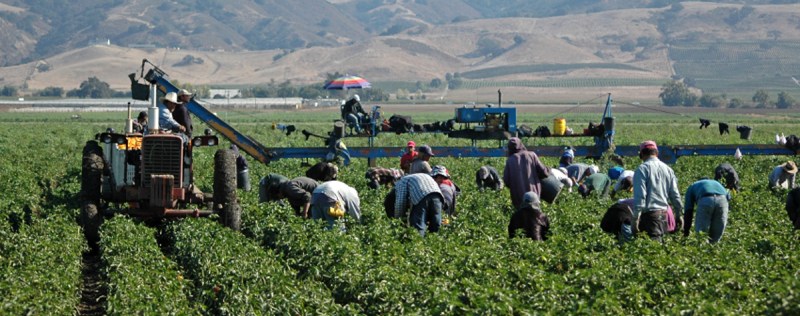
Librada Paz speech, “The Voice of Farmworkers’ Rights” documented her personal journey from being a 15-year-old migrant farmer picking tomatoes after crossing the Arizona desert into the US. Her teenage daily consisted of laboring in the field up to 10-14 hours a day, seven days a week and living in cramped living quarters with 16 other people. While being a voiceless migrant farmer, she suffered from sexual assaults and discrimination that were rampant in the agriculture industry in which labor rights were nonexistent. With financial support from her siblings, she attended high school in Brockport while working in the fields during weekends and eventually earning a mechanical engineering degree from RIT while juggling part-time jobs, farm works and advocating for farmer’s rights. After her RIT graduation, instead of diving into the fruitful career as an engineer, she worked full time to advocate and educate migrant farmers communities to know their rights.
You can learn more details about her tirelessly inspiring journey on how she became a national human rights activist for farmworkers’ rights here.
(Photo: National Farm Worker Ministry) “Let migrant farmworkers live and work with the dignity befitting the importance of their task.” – Dr. Gloria Mattera, Founder of Geneseo Migrant Center
Here are some background and key takeaways on farm workers’ rights in the US:
“Since the 1930s, farmworkers across the US have been denied the most fundamental labor protections: minimum wage, a day of rest each week, overtime pay, disability insurance, collective bargaining, worker’s compensation, and a safe and sanitary work environment.” (1)
Yes, you read it right. Farmers work 10 hours a day, seven days a week with no break, not even a single day, lest they risk losing their jobs.
“Farmworker work up to 16 hours a day with no overtime and no protections from retaliatory firing. They also suffer from higher rates of cancer and other health hazards due to pesticide and herbicide.” (1)
One of the breakout session titled Social Justice Work and Migrant Workers: Past, Present and Future , presented by Geneseo Migrant Center members, addressed all aspects of a farmer’s life (from their seasonal follow-the-crop migration, to their lack of healthcare and education) was an eye-opening lecture for me. One of the slides detailed a devastating healthcare condition of a farmer that Geneseo Migrant Center worked with,
“Dr. Matlin remembers one extreme case found through in-camp health screening. A diabetic man had severe osteomyelitis. An ulcer had eaten through his skin and flesh into the bone. Lacking money, insurance or first aid supplies, he had stuffed the ulcer using toilet paper and kept on working. With the center’s intervention, he was finally admitted to a hospital, where the ulcer was treated.”
Two decades after New York farmers fight for their basic rights, the Farmworkers Fair Labor Practices Act was finally passed in 2019 and will be in effect on January 1st 2020 (2).
The last time the bill reached the Senate was 2010 (almost a decade ago!), which it lost by three votes. Farmworkers Fair Labor Practices Act will grant New York farmer the most fundamental labor protections that all other hourly workers enjoys.
We all want to feel good about the food we consume every day, and the unending ignorance and injustice in labor rights against farmworkers are just some of the many disgraces in our food system that must be stopped. “Imagine the time that people were slaves,” Paz said. “A lot of the farmworkers were slaves, and since that time, they’ve excluded farmworkers from having equal rights with other industries.”
My first
internship is literally changing my life! I am an intern with the Marketing
& Communications department at Genesee Community College, also called
MarCom, and already have experience gained in areas that I never thought would
be within my reach. I have documented and created event calendars throughout
the local community. In doing this I found great free sites to advertise
publicly and the structure and manner of creating an event. I got the opportunity
to work under a trained photographer while practicing photography myself. At
this moment, I knew that I would enjoy being a part of MarCom at GCC.
The hours are flexible and my portfolio will definitely look a lot better because of the opportunities provided by MarCom. I have two days minimum in an office setting and one day minimum working from home. New opportunities come often and they are things to brag about. For instance, I arrived on one of my office days to a professional videographer hired by the school. I was able to witness the beginning process of videography. I was even able to sit in and brainstorm with the team for that project, which included my supervisor and the videographer himself. Not only was I able to sit in and bear witness but I actually felt as if I had a voice. That opportunity will forever stay with me because it became motivational in a way. It reminds me that this can be my life and that I can have a career!
I am also a student at Genesee Community College and MarCom is very understanding when it comes to education. If I have a test or need the day to study, they will not only assent but they would help me find the time to make up the hours that I’ve missed. My goal was to gain experience in an office like setting and in the business world and MarCom has made it possible for me to do exactly that plus more. I can’t wait to blog an update with even more experiences gained by completing my internship with the Marketing & Communications department at GCC.
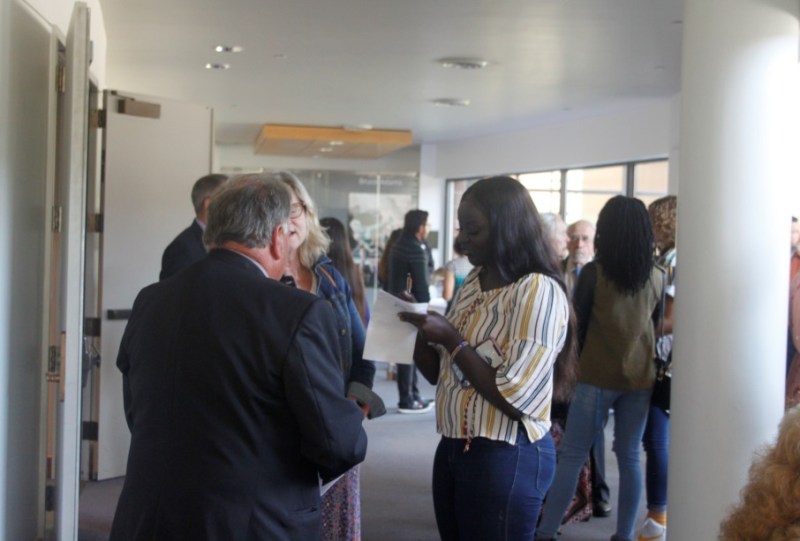
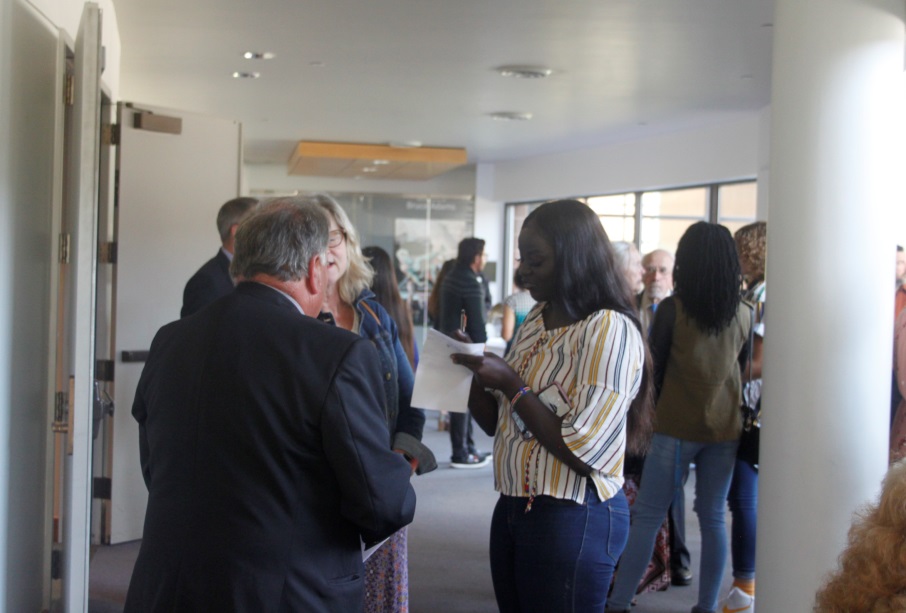
Here is a picture taken by me at Discover the Stars
This was the first event that I had attended for GCC’s Internship Program. This was also where I was able to learn from and work under a Professional Photographer. It was filled with students and donors, which made the moments I’d captured even more special.
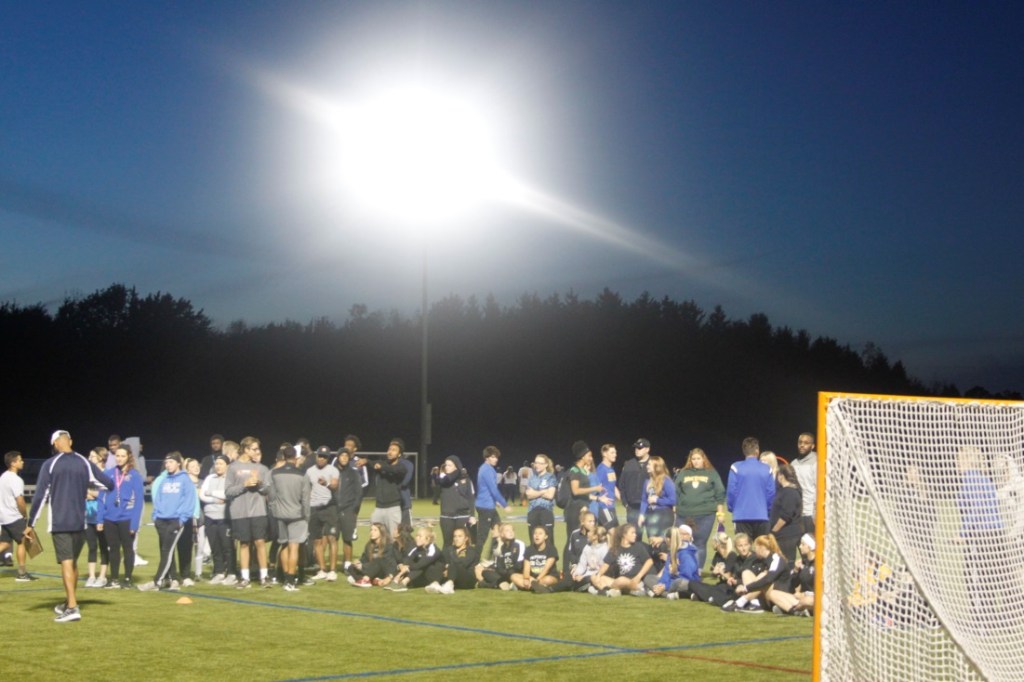
Here is a picture I captured at an event for student athletes
At this event I got to practice taking in motion shots. This event was the same day as Discover the Stars.
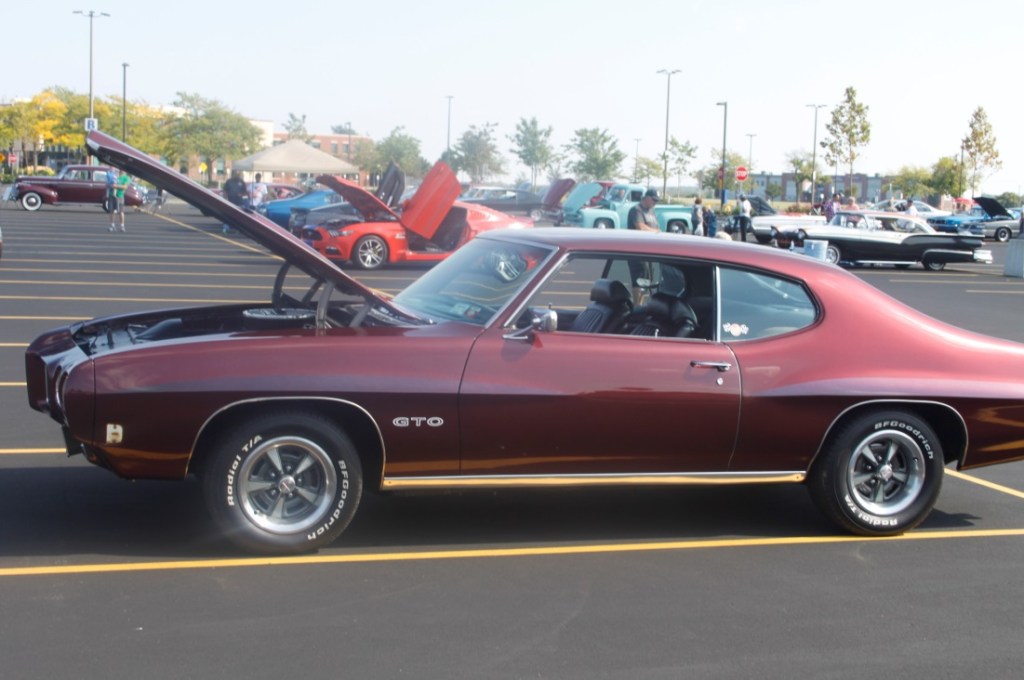
Here is a picture taken by me at the Homecoming Weekend Car Cruise
This picture was taken at a car show at Genesee Community College. I love cars so this event was also a lot of fun.
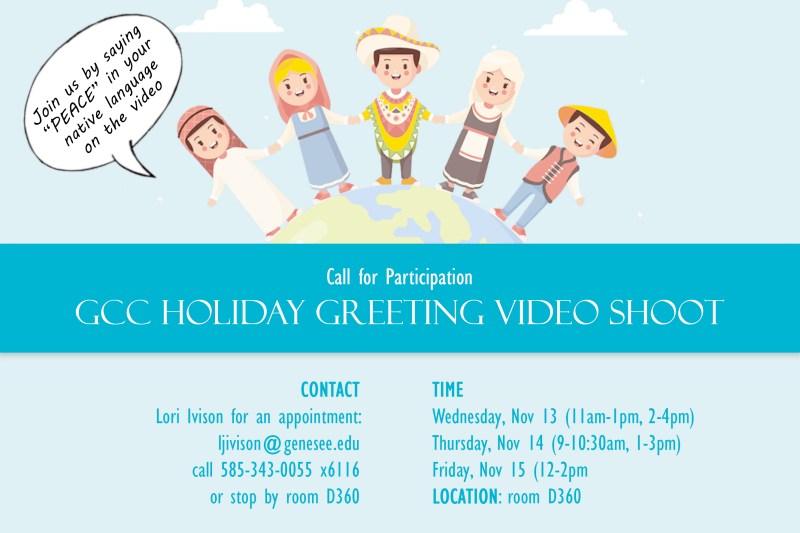
Holidays are approaching all of us and GCC would like to celebrate the holidays with their students and staff by creating an annual Holiday Greeting Video Projects for 2019. You can check out Holiday Greeting Video Projects of previous years on GCC’s Youtube Channel.
This year’s theme is one significant word, “Peace.” We are looking for different members of our campus community to say that one word on camera with as much finesse and sincerity as possible. We are asking international students to say it in their native language, theatre students with their unique flair, fashion students with panache, and anyone else who wants to be involved to join us with their own projection and sentiment of the word Peace.
If you are interested, please join Maureen Spindler in Room D360 for approximately 2 – 3 minutes during one of the following time slots:
Wednesday, Nov. 13 (11 am – 1 pm; 2 pm – 4 pm)
Thursday, Nov. 14 (9 – 10:30 am; 1 pm – 3 pm)
Friday, Nov. 15 (12 – 2 pm)
Or By Appointment
To make an appointment, please contact Lori Ivison by:









 Genesee Community College Blog