Data Privacy Day 2020

Standard

By Pinn Duong

Initiated by The Council in Europe in 2007 and recognized by the US House of Representative in 2009, Data Privacy Day is observed annually on January 28th and became an international effort to inspire discussions and raise awareness of privacy rights and data protection.

1. PROTECT YOURSELF ONLINE

When you are outside: 

Avoid using unsecured (free) Wifi, which is often the case at coffee shops or convenience stores.  Consider using virtual private network (VPN) or mobile hotspot for secure connection.

(Image: mytechquest)  2012 Norton Cybercrime Report

On your personal device

Keep your device(s) and software up-to-date, which include operating system, web browser, apps. Even when you never need the new features that the latest updates offers, updates provides better security and defense against online threats and malware.

Delete when done: some apps are only for a single-use or a short-term, delete them after they are no longer useful 

Use antivirus software: no antivirus can guarantee to protect your device(s) from all threats, but I can provide a basic protection against common malware via periodical scans.

When you’re online surfing / shopping

Strong  passwords: use long & complex passcodes to lock your devices and don’t reuse the password across different accounts. Here’s a tip to a stronger password without forgetting them: use a phrase instead of codes 

A passphrase can contain symbols, and does not have to be a proper sentence. A passphrase is longer than any random string of passcode, easier to remember, satisfy complex rules and next to impossible to crack. Try to reach a minimum of 10 characters for passwords/phrases.

Change password after news of data breach: as digital consumers we are informed of data breaches and are advised to change our password by the company. It’s important to not ignore those messages to ensure your old data become useless even when stolen

Spot email phishing scams

Be alertful whenever you are online so you will be able to detect sneaky scams such as similar but not identical senders/domain names.

An example of an email from a scam sender. Can you spot the mistake?

There are 3 simple rules to spot phishing schemes:

  • Ignore emails, phone calls and websites that create a sense of urgency or requires you to respond to a crisis immediately .
  • Completely ignore what an email looks like: every single detail in a scam email is intricately designed to trick its readers (from logo, brand banner/fonts/image/text, sign-in buttons).
  • Figure out where the destination of the link URL direct to without clicking.

Identical looking button/link can lead to different destination websites (such as the 2 links below). Once you click on a link in a scam email, depends on what the scam click was designed to do, it can direct you to an infected website, access and private data on your device, or open an attachment. We are all susceptible to clicking phishing links when we are unalert online.

Office 365 Login

Office 365 Login

There are several ways you can figure out the destination link without clicking:

  1. Hover over – but do not click – an image/text link to display its actual destination.
  2. Right-click the link to select t “Copy Hyperlink” (Outlook), “Copy Link Location” (Firefox), “Copy Link” (Edge), or “Copy Link Address” (Chrome), and paste it somewhere else to see the text link.
(Image: Digital Check) Hover over a image/text to see the destination link appear

Have a quick read here to learn how to distinguish between a legitimate URL and a fake URL. Above are only a few ways to help you stay safe online, there are soooo many more crucial tips that extend beyond the length that this blog allows. The classic quote by Spiderman’s Uncle Ben fits right into our high-tech life, “With great power convenience, comes great responsibility.”

2. MASS DATA COLLECTION & SURVEILLANCE

But even if you are a tech-savvy person who draconianly follows all the online privacy protection rules above, you can only protect yourself from illegal hackers, not the legal tech companies that seek out and monetize on your privacy.

If it was a decade ago, the invaders of our data privacy were black hat hackers, but as we enter the third decade of the 21st century, we will have to add tech giants and federal surveillance to our list of invaders as well.

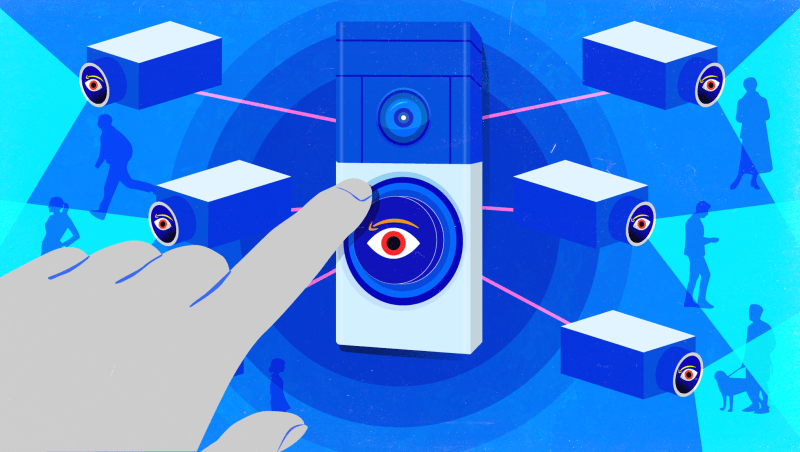
When you  contemplate on what tech giants such as Google and Facebook can collect about you, how much data your phones and devices have on you, all the modern advancements and convenience you are enjoying becomes more Orwellian. The all-knowing ad engines of Google keep tabs on your searches, videos you watch, your locations (via map), your communications and connections (mail & hangout), your (in)decisions ‘to buy or not to buy,’ your previous and future plans (calendar). Even when you have navigated carefully through the rainforest of privacy settings that allows you to limit Google’s control of your data, it’s still unclear what you’re actually permitting Google (not) to do and to what extent is it complying with your permission.

Accompanying the intense growth in big data technologies in the last decade is a plethora of shocking revelations of  behind-the-scene data privacy violations occurred on a tremendous scale.

  • 2013: Edward Snowden disclosed to the media about CIA & NSA ‘s extensive phone & internet spying surveillance on Americans & foreign countries.
  • 2016: Facebook collected data of 50 million Facebook users and indiscriminately shared it with Cambridge Analytica (a political data analytics company) who stored and used it for political advertising without users’ consent. It’s important to note that this was not a breach, but was designed to do so.
  • 2018: Tech companies sneaking into your wallets: Google bought credit card transaction data of approximately 2 billion card holders from Mastercard and shared it with advertisers to track how online ads lead to real-world sales. Not to lose out on the race, Facebook asked US banks to share their customers’ financial data to increase user engagement on its marketplace.
(Image: Bryce Durbin / TechCrunch)

It might seem hysterical or paranoid by some as to why we should be worried about mass surveillance, as if there’s some heinous hidden scheme underway to seek control or revenge upon us. But it’s critical to be aware of the current tech infrastructure already in place that makes it possible for companies to profile most of us via our cell phone use, and how this growing infrastructure can manipulate / influence our daily life and decisions.

Sources:

Featured image: from cnet
Similar & Unique New Year Celebrations in Asia

Standard

By Pinn Duong

This blog is going to explore various Asian countries ‘s New Year celebrations by their similarities, which are grouped into 2 categories:

  1. Countries influenced by Chinese’s New Year: Korea, Japan & Vietnam
  2. Countries that celebrate New Year with water fights: Thailand, Lao, Cambodia, Myanmar

1. COUNTRIES INFLUENCED BY CHINESE’S LUNAR NEW YEAR: Korea, Japan & Vietnam

Under Chinese’s historical dominance and influence, Vietnam, Korea and Japan adopts many similar New Year customs similar to that of the Chinese’s Lunar New Year, which commonly occurs in late January or early February. Mongolia and Tibet’s Lunar New Year occurs near or on the same day as the Chinese’s Lunar New Year, but Mongolia’s and Tibet’s New Year celebrations are unique by themselves. 

BUT, Japan celebrates New Year on January 1st. Initially, the Chinese’s calendar was introduced and adopted in Japan in the 6th century CE. During that time, Japan shared its New Year celebrations with China, Korea and Vietnam. However in 1873 during Meiji Restoration, Japan adopted the Western Gregorian calendar, and Jan 1st became the official New Year’s Day. Initial opposition to the sudden change was strong, but the resistance only lasted until the 1900s when the lunisolar calendar disappeared from annual celebrations.

Lunar New Year are also called Shōgatsu 正月 (Japanese), Chunjie 春节(Chinese), Tết (Vietnamese) and Seollal 설날 (Korean). The traditions outlined below are shared among Vietnam, Korea and countries that host large populations of Chinese ethnics such as Malaysia, the Philippines and Indonesia. Each country has their own adaptations of the Chinese influences.

NEW YEAR GREETING

On the first day of the Lunar New Year, families visit the oldest male relative’s house to pay respect and wish good fortune to the elders for the upcoming year. In return, elders gift the younger ones with lucky red envelopes.

New Year greetings are even more structured in Korea. Children (and sometimes adult offsprings) dress in traditional hanbok and line up to pay their respect to elders (parents, grandparents) with a traditional, respectful bow called Sebae.

New Year greeting in Vietnam.
Korean_Life_Festival_01.jpg
Sebae (New Year’s Bow) in Korea

ANCESTRAL WORSHIP

On the first day of Lunar Year, families and relatives gather at the house of their oldest male relative to pay their respects to both ancestors and elders. Before the New Year’s Eve, many families spend hours cleaning and preparing food and offerings which will be taken to their ancestors’ graves and ancestral altars, symbolizing many past generations.

The ritual begins when the eldest male kneels down in front of the altar with a burning incense in his hand, and he puts it  into the incense burner and bows deeply three times afterwards. 

After they have visited all of their ancestors’ graves or altars, all the food is gathered for a huge feast shared among families and friends. 

Traditionally, only male members participated in the worshipping rituals while females prepare the food and offerings and are not allowed to partake in the rite. In modern times, the rite can be done by all family members.  

(Photo: uBitto) Koreans’ ancestral worship rituals called “Charye” (차례)
Mâm cúng giao thừa gồm những gì
(Photo: VinID) A common sight of ancestral altar in Vietnam: elaborate offerings, multiple dishes & fruits decorated with flowers & candles 

LUCKY MONEY

The Chinese custom of gifting red envelopes (or “hóngbāo” in Mandarin) began in ancient Qin Dynasty.  Elders would thread coins with a red string to ward off evil spirits. It stems from a legend that a demon named “sui” (Chinese: 祟) would quietly surround children on the New Year’s Eve, causing them fear and sickness. The threaded coins were eventually replaced by red envelopes as printing presses became common. 

Click to enlarge
Threaded coins
2020 is year of the Mouse!

Similar customs have been adopted in Korea with a twist. Instead of red envelopes, Koreans use silk “fortune pouches” (Bokjumeoni in Korean) as a symbol of keeping good fortune and prosperity in the pouch. Since Korean traditional dress “hanbok” was not designed with any pockets, the Koreans created Bokjumeoni and tie it at the waist side.

Korean’s Bokjumeoni  (lucky pouch)

Similarly, the act of gifting children decorated paper envelopes filled with New Year money is known as Otoshidama in Japan. It’s interesting to note that, unlike the Chinese and Vietnamese envelopes that are dominantly red/yellow printed with new year wishes, Japanese envelopes (called Pochibukuro) are decorated with unrestricted range of colors and topics.


(Photo: FIT blog, ExpertWorldTravel) Pochibukur

Traditionally, older children would receive more money; but many adults in modern time gift the same amounts to their children, newphew or neices to avoid jealousy and arguments between siblings / cousins. This is usually the favorite part the New Year’s for many children, similar to how Western children excitedly look forward to presents during the Christmas or Easter holidays.

2. COUNTRIES THAT CELEBRATE NEW YEAR WITH WATER FESTIVALS: Thailand, Lao, Cambodia, Myanmar

Thai, Lao, Myanmar and Cambodia are known for their water splashing festivals during New Year Celebrations, which occur from April 13-15 in accordance with the sun’s movements. Other countries that also celebrate the New Year at the same time include Bangladesh, India, Nepal and Sri Lanka, but they have entirely unique customs of their own.

Mid-April marks the end of a harvest season, the time when farmers can start enjoying their hard work all year before the monsoon season begins. April is when the summer reaches its peak temperature, make it difficult to toil long hours in the field, and allow farmers to have a break from the labor.

BUDDHISM PRACTICE

All  four countries begin the New Year mornings with religious rituals and merit-making at the local temples to start off a New Year with good deeds. An iconic ritual for the New Year holiday in Lao, Cambodia and Thailand is bathing Buddha statues and images with perfumed water. It symbolizes renewal, purification and cleaning away evil deeds.

(Photo: Bliawa) Bathing Buddha statues

Other merit-making acts include preparing offerings to the monks, releasing and freeing captured animals (bird, fish, crabs, tortoises and mostly small animals) and helping the poor through charity.  

In Laos and Cambodia, they build sand stupas, which are later decorated with flowers, flags and sprinkled with perfumed water, in remembrance of the deceased.

sand pagodas on the beach at Bang Saen
(Photo: Thaizer) Sand pagoda / sand stupas in Thai.

WATER FESTIVALS

Traditionally, the act of sprinkling water on one another signifies respect and blessing, to wash away the staleness, the bad luck from the old year. Young people would pour water over their elders’ palms to pay reverence.

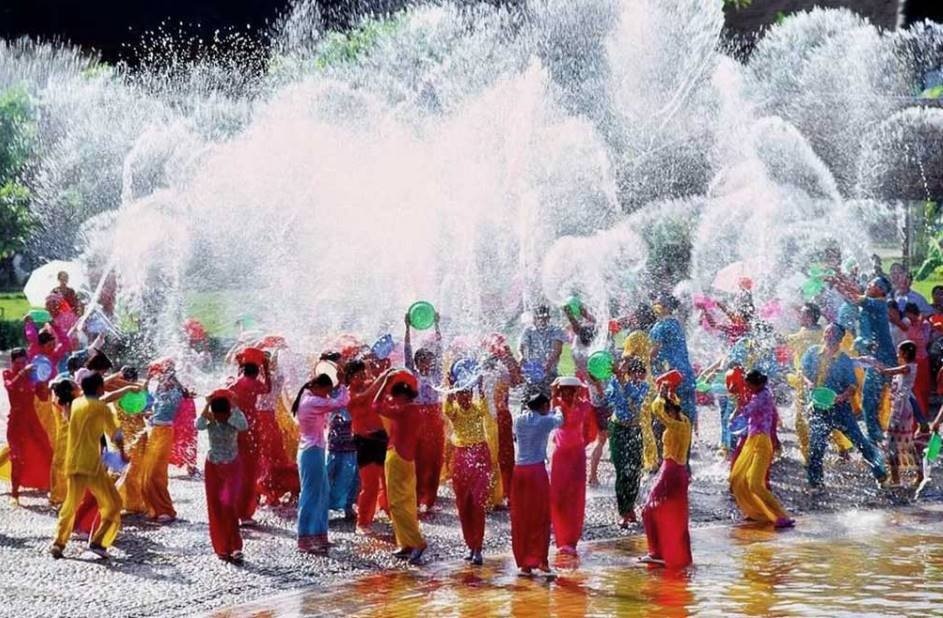
But since New Year holiday falls on the hottest month, many recently take the blessings to another level and splash water one another and bypassers with buckets or cannons. In Thailand, major streets are closed to allow for water festivals.

(Photo: asiadmc) Songkran Water Festival during Thai New Year 

Featured photo: Vector Stock

Introducing Myself

Standard

Hi, my name is Donald Lockwood and I am a student here at GCC and am doing an internship with the Marketing & Communications Office (MarCom). I am going to GCC for Business Administration with a concentration in Marketing and Social Media. I am a sophomore and am working on my fourth semester.

I am a photographer and am also in the Photography Club where I am the secretary. I help with the Instagram account for the club. If you would like to follow, our Instagram is @gcc_photoclub. The professor that I have that advises the photography club, Joseph Ziolkowski, or Joe Z. as everyone calls him, is having a show at GCC right now in the Rosalie “Roz” Steiner Art Gallery and I will be doing a blog on his exhibit hopefully next week. I love to take photos of nature and the outdoors. One of my favorite places to take nature photos is at Letchworth State Park in Wyoming County. I grew up going there and have always loved it. I strongly suggest that if you are in the area and haven’t been, definitely take the drive and go. There are beautiful waterfalls and amazing hiking trails throughout the park. I also like to take nature shots when I’m driving. I almost always have my camera with me and when I don’t I always have my cell phone. I also like taking sports photos. I have taken many photos of the women’s and men’s soccer teams. I have friends that are on the Women’s Soccer team and they always think its cool when I get a good shot of them playing. I also have a friend on the Softball team and hope to make it to some games this spring to get some good shots of them playing.

Great day, but chilly at Letchworth State Park

If you would like to take a look at some of my favorite photos, I have an Instagram account and you can follow me @donald_lockwood_photos. I have some nature photos, sports photos, and a portrait of one of my friends. I would love to get into doing more pictures of just people, I just haven’t had the people to take photos of.  Interested? Message me on Instagram.

Having an internship with MarCom I hope will help prepare me with what I would like to do in the future. I hope to one day either work for or run my own business to do freelance social media for small businesses in the area that are just starting off that don’t really have the money yet to pay a big name agency to run their social media and website, or can’t yet hire staff to do this important work. Now-a-days, you can’t really run a business without having a social media account, whether it be Facebook, Twitter, Instagram, or any other social media. Working with MarCom will get me website and social media experience, as well as writing blogs and press releases that will help me get a marketing and communication position after I graduate this spring.

Thank you for reading over my blog and look out for more soon.  

Student Discounts & Tips you should know

Standard

By Pinn Duong

If there’s one New Year’s resolution that will be repeated every year and will sustain you the most in the long-term and the short-term, it’s making a vow to save more money. Budgeting as a student is an endless problems (that is, until your student life ends), but knowing a few tricks and tools can relieve the stress.

Unidays

Unidays partners with various popular brands (in tech, fashion, beauty, fitness) to offer discounts and exclusive deals to students. The most common discount rate is 10-15% off, but deals can be as high as 60%. But don’t be blinded with all the discount numbers, as discounts do not automatically guarantee the best prices, so always shop around before swiping your card.

Cash Back Credit Cards

Thanks to a previous GCC international student blogger, Zerin Firoze, who shared some of her money-saving tips as an international student, I learned about building a good credit score and cash back rewards. If you are an international student or without an SSN, you should research and compare different (secured) credit cards before deciding which suits you best.

Extra note for international students: if you plan on residing in the US for the next several years, it’s important and almost necessary to build good credit history to prove that you are a reliable borrower, which determines whether and how well you can get loans, rent a desirable apartment or buy high-priced items like cars. 

After much research and from personal experiences, Discover it Student Cash Back arguably offers the highest rewards, cashback and perks for students and beginners who are learning to build credit.

  • 5% cashback in rotating categories each quarter: For example, it’s January right now so you’ll be able to earn 5% cashback from groceries stores until end of March. This is in addition to unlimited 1% cash back on all other purchases.
  • Good Grades Rewards: $20 statement credit each school year your GPA is at least 3.0 for up to the next 5 years.
  • Other perks: cashback match at the end of the first year, free FICO score, low fees and forgiveness for your first late payment.

Greyhound Student Advantage for bus rides

If you are car-less (like me) and rely on buses to travel during vacations, a Greyhound Student Advantage Card, which costs $30 per year, offers 10% off tickets and 15% off nationwide shipping. The Student Advantage Discount Card also offer students exclusive discounts from major retailers, travel and entertainment providers partners. You can find their up-to-date lists of partnership with national brands here.

Additionally, Greyhound also offers a road reward program in which you collect points every time you travel. The points add up quick, you receive 1 point per one-way Economy trip (or 3 points per one-way Flexible fare). The higher the points, the higher the rewards (This program is for anyone who signs up for it, not just students.)

Freebird for Uber/Lyft rides 

Again, if you are car-less, you either rely on buses for long trips and Uber/Lyft for short rides. Freebird allows you to earn points/rewards for every ride you take with Uber or Lyft, in addition to generous promo bonuses during special occasions. Highly rated on both Google Play Store and Apple Store (4.7 and 4.8, respectively), Freebird is much more generous in rewards and cashback than Uber built-in systems. Specifically, you can cash back at least $10 (which equates to 5000 points) after 20 rides (250 points/ride).

Cons: you can only connect the app to either Lyft or Uber one at a time, not both. This is a detriment since many people are connected to Uber, but Lyft often offers cheaper rides. Also, Freebird ‘s rewards 250 points per ride regardless of the distance, whether it’s 4 miles or 30 miles. On the bright side, Freebird doubles up the points during special occasions or holidays.

This app is also something I learned from GCC international student blog post by Zerin.

Student Universe for flights

This online travel agency offers cheap flights for students and faculty. To get the best price, it’s advisable to book ticket at least 1.5-2  months in advance. As a trade-off for their super cheap fares, there are many restrictions: tickets are mostly non-refundable, and it will be very costly to change ticket details (such as dates, destination, passenger). So only book on Student Universe if you are dead sure your trip details will not change later on. I had comfortable and affordable experiences using Student Universe so far, but that is because there were not any post-booking or last-minute changes to my trips/flights and I luckily never had to deal with the reputably unfriendly customer service. 

This is an example of ticket fares for a round-trip flight from JFK to LAX booking 1.5 months in advance.

If you’re looking for more money-saving tips, I recommend you to check out Zerin’s previous blog posts (part 1, part 2) on the topic.

I personally have used all of these services at least three times and have had positive experiences with them in my money-saving battle, so rest assured none of those recommendations are monetized ads. Happy 2020 and happy savings!

Featured image by kstudio from Freepik.

Excel House: a project by GCC alumna Yuki Sasao

Standard

By Pinn Duong

Let me start off by bragging a little about the off-campus house I’m renting and living in. It is a newly renovated and furnished house near downtown, close to conveniences and grocery stores and near Batavia’s bus line with affordable rent. The house was bought and renovated by a GCC alumna, Yuki Sasao. After graduating from GCC in 2014 with an Associate Degree in General Studies and Business Administration, Yuki, who was then an international student from Fukuoka, Japan, went on to obtain her Bachelor in Accounting from SUNY Oswego and is currently working as a CPA at Deloitte in Portland, Oregon.

So what’s the big deal about an alumna buying a house and leasing it to the younger students, you ask? Yuki doesn’t treat her student renters just as tenants, but also as her mentees. Yuki aims to provide support and counseling in academic, career development and cultural differences. This past November, Yuki strongly advised us to attend the Boston Career Forum and offered to pay for our two-night hotel stay so we can confidently dip our foot in the job hunting and professional networking event. Boston Career Forum is the world’s largest job fair for Japanese-English Bilinguals. Even though I didn’t join, two of my housemates who are Japanese international students learned some business dress-up, networking etiquette and even scored a few interviews with recruiters during the event. During finals’ week, Yuki sent us care packages overflowing with warmth (candles, socks) and sweetness (sugar canes, chocolates, gummy bears, …) to aid us through the stressful time. Yuki often holds International Student Workshops during school breaks (Spring Break, Winter Break) to discuss her experiences navigating the US job market and the struggles uniquely encountered by international students that she admittedly learned the hard ways.

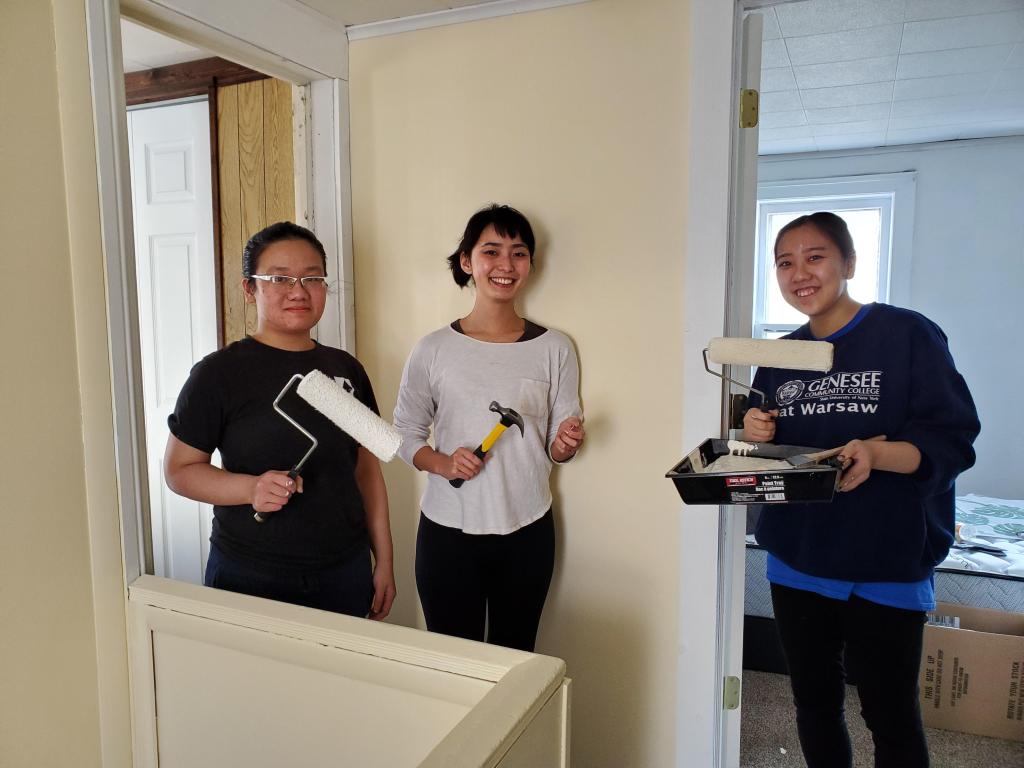
Specifically with her newly bought house in Batavia, Yuki intends to create a homey living environment for her student tenants, instead of just a house to stay in. “I’d be really sad if you guys just sit in your own room all day and not hang out together in the common space,” Yuki shared as she was putting up floral wall stickers in the living room. As a handy and crafty person, Yuki loves home decor and possesses a wide range of household repair and maintenance skills which she learned through volunteering for Habitat for Humanity during undergraduate years. During this Christmas break, Yuki visited Batavia to further renovate the house with wall stickers, decorative lightings and repaint several rooms in the house. I picked up a little knowledge in painting and drilling while helping her out, too. 

Room painting during Christmas break!

At first, I thought Yuki bought a house in Batavia because she will be retiring here or will have some personal future plans with it. But I slowly realized the house and its affordable rent was set up solely as part of the support network that she hopes to provide for the younger international students at GCC, in addition to her mini career workshops and guidance. The house is also her way of helping us, foreign students, to connect and immerse in the local Batavia community. She refers to the house as Excel House Project, with hopes that her students will excel in their academic or career paths with her support. Excel House Project is her way of giving back to the Batavians and GCC community for helping her when she first set foot in America.

Tech tips in the Digital Age

Standard

By Pinn Duong

In this rushed and overloaded digital age, speed and productivity is power. Some of the tech tools below can be the very hacks you need for productivity so you can optimize your time and effort, and save more quality time for more quality tasks. 

Unroll.me

Unroll.me makes it super easy for you to unsubscribe from junk / spam emails without having to delete them manually so often. When you sign up for the service, it will scan through your email to display a list of subscriptions that are filling up your inbox, including subscriptions that you never knew you signed up for. It also helps to remove scam emails whose unsubscribe button doesn’t actually work.

It helps you waste less time skimming and sorting through your crowded mailbox every day.

  • Available as: website
  • Charge: Free

Canva 

“The design tool for non-designers,” this popular web-based graphic design platform allows users to create their own designs & customize graphics, prints, presentation slides from hundreds of professional layouts and templates. If you would like to create an eye-catching poster for an event or an enviable presentation without spending too much time or dabbing into more complicated software such as Adobe, Canva is the place.

For an individual who’s looking to create a quick professional-look design, free version of Canva is plentiful. You can compare their free & upgraded features here. Also, you’ll need to sign up for Google or Facebook account before using.

  • Available as: website & app (ios & android)
  • Charge: Free & paid
Plenty of design templates from Canva

Print Friendly 

As the name suggests, the service helps you remove any navigation, ads, and junk to print a clean-looking article. You can also customize or delete the text and image deemed unnecessary before printing.

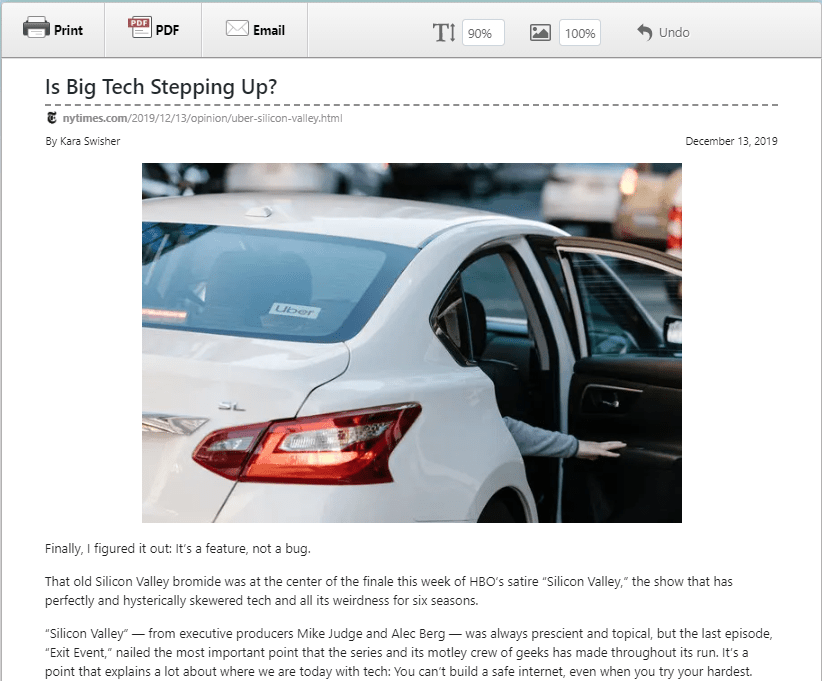
Equally important, if you don’t read the New York Times article frequently enough but already exceeded your limit of 10 free articles per month, you can paste the blocked article link into Print Friendly and see its entirety.

  • Available as: website & browser extension (chrome & firefox)
  • Charge: Free
A blocked New York Times article which requires subscription to view
Goes to Print Friendly and paste the article link, the whole article is viewable!

Scanner Pro 

There is a good reason why this app is ranked at #2 on IOS App Store for Business category. Scanner Pro produces top quality scans, offering accurate intelligent character recognition (detects readable text and convert them into machine-encoded text), and doing it all with a smooth interface. It automatically detects borders, reduces distortions, lets you export it as jpg and pdf and share/upload right inside the app.

Since using this app, I feel like those bulky document scanner in the office and library will become museum artifacts in the near decades.

  • Available as: app (ios)(there are many different apps on both ios & google play store for the same purpose of different price range for you to pick from)
  • Free & Paid (one-time payment of $3.99)

Video speed controller

In this overwhelming information age, speed listening is the trick to learning more and quicker from multimedia such as videos and podcasts. If you find it torturous and distracted to sit and listen to an online lecture/video of a slow pace, or if you’re more engaged and focused in high-speed informative listening, this video speed controller is a must. A video speed controller also helps you quickly ‘skim’ through unimportant video sections without skipping/missing its main points. Equally important, this extension allows you to customize hotkey (keyboard shortcuts) to increase/decrease speed and skip forward/backwards without touching the mouse.

  • Available as: Chrome browser extension (Firefox also has similar add-on)
  • Charge: free

Pop-up dictionary/translator

If you’re learning a new language or looking to improve your vocabulary through voracious reading, pop-up dictionary and translator helps to reduce interruptions of looking up a word. There are multiple chrome extensions available for this feature, including but not limited to, Good Word Guide, Dictionarist, Google Dictionary (multiple languages). Personally, I used 3 different pop-up dictionary extensions so that I can be exposed to different ways a word is defined.

  • Available as: Chrome browser extension (Firefox also has similar add-on)
  • Charge: free
Google pop-up translator from Chinese to English
Multiple pop-up definitions from different apps

I have personally used all the tools listed in this blog, and have loved them enough to recommend them to you! I hope you find them useful as well!

Feature image: vector created by Rawpixel from freepik.com

Celebration of the Lights: Hanukkah & Kwanzaa

Standard

By Pinn Duong

On December 3rd, Global Education club at GCC held a cultural event called “Hanukkah and Kwanzaa” to share with the students the different ways Jewish-Americans and African-Americans celebrate the end of a year, with free food and free books! It was the event I needed to destress during the final week of classes, especially when the dishes of delicious cookies tamed my sugar cravings.

GCC hard-working staffs feeding the students with sweet treats during finals week!
Free books!

But I swear I was not just there for the colorful sucrose, I also picked up some awareness on year-ending cultural celebrations of the Jews and Africans, and I’m not talking about Christmas.

HANUKKAH (or Chanukkah)

Also known as the “Festival of Lights,” Hanukkah is an eight-day celebration inspired by a Miracle that occurred after the Maccabees successfully revolted and chased the Greek-Syrian oppressors out of Jerusalem during the second century BC. While rebuilding the (holy) Second Temple, the only remaining candle, which was supposed to last a single day, continued to flicker for eight nights and provided light long enough for the Maccabees to gather supplies. This ‘miracle’ illustrates the divine intervention of light amid spiritual darkness.

Hanukkah observers light each of the eight candles each night while the central ninth candle (called the “shamash,” means helper) is used to light the other candles. The candle holder is uniquely called ‘menorah.’ During Hanukkah, Jewish observers eat fried foods cooked in oil to represent the oil that burned the remaining candle miraculously for eight evenings (1).

Hanukkah with 9 candles on a “menorah” (a nine-branched candelabrum)

KWANZAA

Kwanzaa holiday was introduced by professor Maulana Karenga in 1966 to unify African-Americans in faith and endurance amid social and cultural unrest of poverty and police brutality.

In Swahili language (an Eastern African language spoken in Kenya, Uganda, Tanzania, Mozambique and Zimbabwe …) Kwanzaa means ‘first fruits’ or first harvest. Celebrants decorate their household with symbolic objects that reflect values of unity and gratitude for the good things in their lives and community. Kwanzaa’s seven-day commemoration surrounds the Seven Principles (“Nguzo Saba”):

  1. Umoja – unity
  2. Kujichagulia – self-determination
  3. Ujima – collective work and responsibility
  4. Ujamaa – cooperative Economics
  5. Nia – purpose
  6. Kuumba – creativity
  7. Imani – faith

During Kwanzaa, a candle, representing one principle, is lit each day on a kinara. Observers would light the central black candle on the first day, then alternates between the red and green candles starting from the outer candles moving inwards on following days.

Unlike Hanukkah which is rooted in the Jewish religion, Kwanzaa is a cultural, not religious, holiday that was traditionally celebrated by African-Americans. Thus, Kwanzaa can be observed by non-Africans due to their universal values of unity and purpose, which were evident in their civil rights movements during the 60s.

Kwanzaa starts annually on December 26th until January 1st, while Hanukkah dates are based on Hebrew calendar month of Kislev, which varies between November and December of our usual Gregorian calendar (2).

Hanukkah with 7 principles, 7 candles on a “kinara” (Swahili word for candle holder).

Were you surprised to find many similarities between the two seemingly irrelevant traditions? 

Sources

  1. https://www.history.com/topics/holidays/hanukkah
  2. https://www.thesouthend.wayne.edu/features/article_de2cabe6-a67a-11e5-8f26-cb25d4e32df3.html

Featured photo (from Alma): Kwanzaa candles

Native American Heritage Month 2019: Quill Workshop

Standard

By Pinn Duong

On November 26th, quill master Jamie Jacobs held a workshop at GCC to share knowledge about Native American’s lost art of quillwork embroidery. Guest speaker and Tonawanda Seneca Jamie Jacobs is a collections assistant at the Rochester Museum and Science Center. His role at RMSC includes working as an education expert on Haudenosaunee (Iroquois) culture and as an anthropological consultant documenting Iroquois ethnological collections at the Museum. He graduated from Genesee Community College with an Associate Degree in Criminal Justice in 2006.

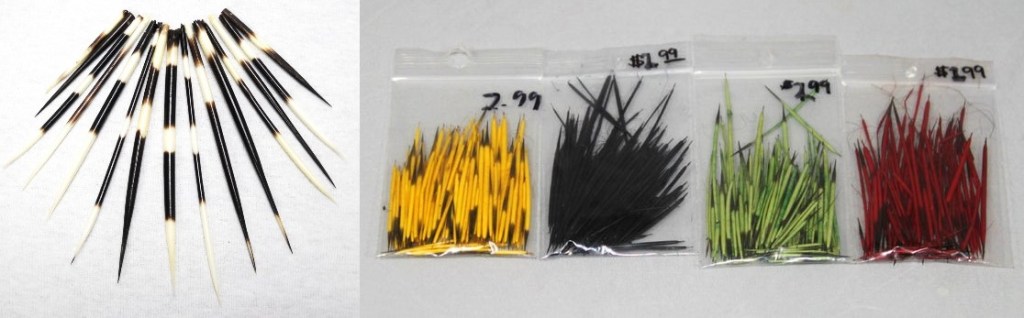
What does a quill look like when observed in close-up? A porcupine quill is a round, hollow tiny tube with a pointy end. A porcupine has around 30,000 quills on their back. So how do Native Americans obtain quills from porcupines? It’s easy to get quills from dead porcupines, but for living ones, native women had to sneak up behind the animal and throw a blanket over it. In natural defence, porcupines will raise its quills which will be stuck in the blanket. Quills are easily detached from the porcupines when touched. Like hairs, porcupines grow new quills to replace the ones they lost. Quills have sharp tips with microscopic backwards-facing barbs that clings to the skin, which make it difficult and (and slightly) painful to pull the quills out of an animal’s or human’s skin (1).

(Photo: AAAS) A zoomed-in of quills’ sharp tips and their backwards-facing barbs that make it difficult to pull the quills out of an animal’s or human’s skin.
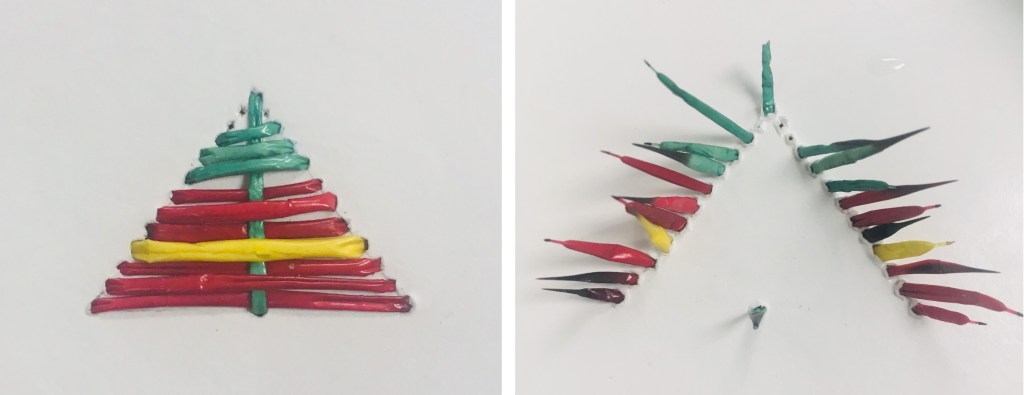
(Photos: Land of Strange, Etsy) Porcupine quills before and after dyeing.

Once obtained from the porcupines, quills need to be cleaned with hot water (to avoid diseases if quills get stuck in the skin while working), dyed and flattened. Quills are softened in warm water again before embroidery. When glass beads became widely available from Euro-American traders around the 1850s, quillwork gradually became a lost art. Due to their durability, beads were read-made, easier to acquire, easier to take care of, quicker to embroider and were available in a wider range of colors. It can take more than a year for a master quill worker to quill a shirt, but with beads, it only takes a few months (2).

A fully-quilled purse made by a master quill artist, such as Jamie, can easily cost $1000-$2000, and they are sold out fast.

(Photo: Jacob’s Facebook) Jamie Jacob’s collection of his past quillworks.

Though I was not able to create a $2000 quilled basket ready for sale during the one-hour workshop with Jamie, I did finish a tiny piece of crooked quillwork on paper and had a peek at the immense amount of diligence and time required of quill workers.

The front and back side of my amateur & crooked quillwork 🙂

Sources:

  1. https://powwow-power.com/quillwork/
  2. https://prairieedge.com/tribe-scribe/quillwork-a-vanishing-native-american-art/
  3. https://books.google.com/books?id=liCOtoUbbx8C&dq=quill+work+keep+women+at+home

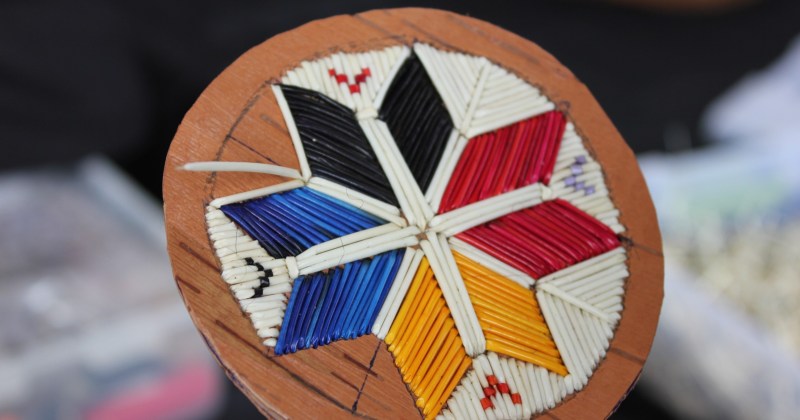
Featured photo (from Multicultural Kid Blogs): Quillwork on birchbark.

Native American Heritage Month 2019: Dancing with the Tonawanda Senecas

Standard

By Pinn Duong

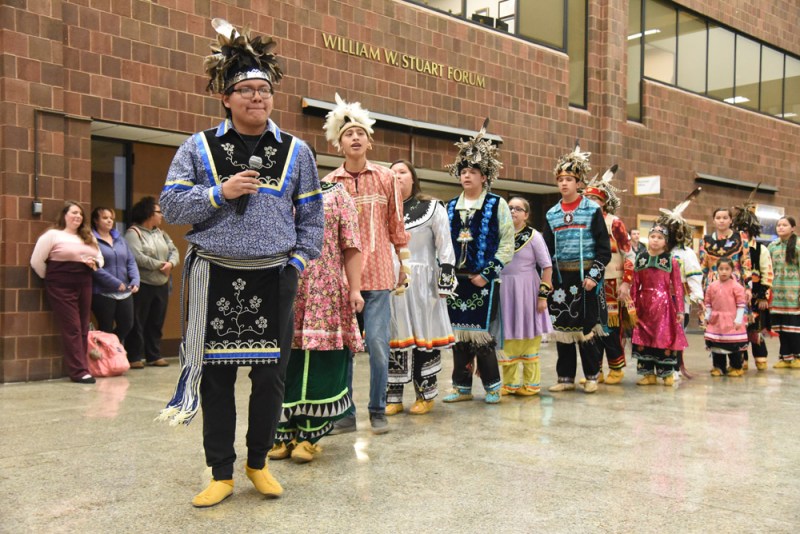
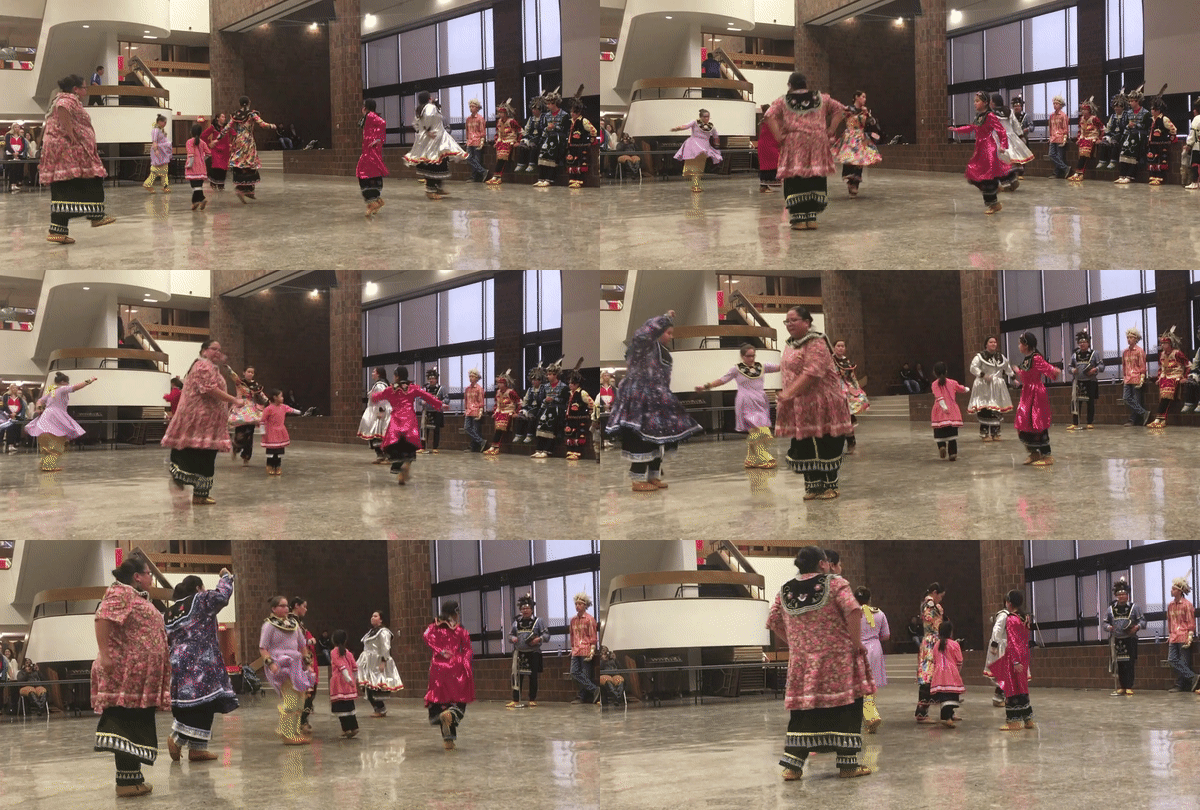
On November 21st, GCC celebrated the Native American Heritage Month with Tonawanda Seneca Nation Dancers at the Harvest Festival. It was the first time I saw a Native American social dance and their lively garments and experienced the energy brought on by the social bonds between the dancers. They even invited many of the attendees to join in their rhythms and footsteps. 

Seneca was the largest of six Native American nations (the other five nations were Mohawk, Oneida, Onondaga, Cayuga, and Tuscaroras) which comprised the Iroquois Confederacy or Six Nations, a government that pre-dates the United States Constitution. As Seneca occupied the most western region of the Iroquois, they were known as the “Keeper of the Western Door.” The Seneca nation’s own name is Onödowága, meaning “People of the Mountains.” Present-day Senacas lives on three reservations: Tonawanda, Cattaraugus and Allegany, each named for the river in which they are located (1).

The Iroquois word for social dances – guyno, so, ohn anndwadek, note, gawdoe – translates as ‘a group of songs for entertainment purposes.’ Social dance comes at an early age in the traditional communities of the Iroquois. Expectant mothers would introduce melodic and rhythmic movements to their developing infants, accustoming their children to the flow of dancing and social bonding that comes with it.

Many social dances are associated with mammals such as the rabbit and racoon, duck, robin and pigeon. Almost every dance is led by the announcer who serves as a “caller” ensuring all the dancers stays on beat and doing the correct steps. Below are some of the common social dances across the Nations:

Women’s Dance

This social dance expresses gratitude for the fertility of Mother Earth and to the “Givers of Life” – corn, beans and squash – which are the complementary crops essential to the agriculture of the native tribes (2).

Corn dance

Corn is the leader within the “three sisters” of plants that provides ecological and nutritional balance. With its high nutrient requirements, corn crops can deplete the soils’ nutrients and needs its sisters, bean and squash crops, to enhance and protect the nutrients of the soil. Corn dance is performed in a double line which symbolized planted rows (2).

Smoke Dance

Originally a war dance, the likeliest origin of Smoke Dance probably has little to do with smoke, and more to do with war. The Six Nations had dances that would help warriors prepare for battle; once the wars stopped, the dances became ceremonial to their ancestors. These dances—performed solely by men at the time—were slow, heavy and dramatic, meant to incite the fortitude for combat. 

The Senecas were particularly skilled at warfare but were also sophisticated in diplomacy with the other five Nations. As war dances had lost their original inspiration over time, they became known as smoke dances (3).

Sources

  1. https://drumhop.com/music.php?page=189
  2. https://folklife-media.si.edu/docs/festival/program-book-articles/FESTBK1993_22.pdf  
  3. https://newsmaven.io/indiancountrytoday/archive/on-the-words-tribe-and-nation-NUTfP-tyU0uqza8cle2BSg/

Chicago, Batavia, and the Future

Standard
Dennis Austin

“What is a Batavia, NY”? were among the many questions, family members, friends, and colleagues had asked me as I began to prepare for the move from the glamorous city of Chicago to a region where there were more cows than people.

For most of my life Chicago was home. The people, the culture, the food, the music, and other key characteristics that define our great city, was an everyday experience I had come to know since I was born. For goodness sakes, I was born in 1993, a year the Chicago Bulls accomplished their first three-peat. If Basketball was our religion, Michael Jordan would be God himself. I had made good memories here, met interesting people, and lived a steady life.

Chicago Bulls legend Michael Jordan

So why leave?

When people from this region would find out about my Chicago origins, I was always asked by default “Why Leave?” “Why Batavia?”

Chicago skyline at night

For me, it was simple. I had grown tiresome of the fast-paced lifestyle that had encumbered my ability to be more flexible as it pertained to seeking opportunity. There was also the reality of friends moving across the country for academic and professional reasons, collapsing my social circle at home. Working in a hospital call-center, albeit with zealous colleagues whom I heap nothing but praise on to this day (except for one individual), was not something I envisioned for myself when younger. If anything, compared to previous years spent travelling across the country campaigning for politicians, this was a rather tedious tenure. While there were several enjoyable conversations with patients and physicians alike, I was beginning to grow weary of my long-term prospects and thus sought an opportunity to change course. In late summer 2017, I began a vigorous search for community colleges with on-campus accommodation housing and respectable tuition fees. At the end of this search were two colleges, GCC being one of them. On November 3, 2017, by way of a 12-hour Amtrak journey I made my way from the city Michael Jordan made famous to Rochester, N.Y. Assisted by my former advisor Lourdes Abaunza, I would register for Spring 2019 classes, spurring a new relationship with this community.

I remember my first day arriving on a cold and wet January vividly. Upon exiting my ride-share, I was introduced to the harsh Western New York weather with heaps of rain pouring down upon my face and luggage. I hurriedly grabbed my bags and began a brief sprint to a room beneath the safety office at College Village. I would be given my keys and a packet for new residents, including an itinerary of weekend activities. Escorted by a tall and lanky Resident Assistant known as Matt, I would find myself standing in the middle of my new home, miles away from the comfortable settings that had become familiar to me. The experience was foreign to me. The absence of 24/7 buses and trains with sprawling downtown buildings that made the city glow, was foreign to me. However, I soon became accustomed with my new surroundings. Learning about the region and inhabitants served as a history lesson. People I saw as strangers would become friends, some of them lifelong.


Getting acclimated to a classroom setting was an entirely different set of challenges. I recall my first class. Math 091 taught by Professor Mark Siena. I remember arriving 25 minutes before class began at 7:45 am.  Awaken by the sound of my alarm at 6:30 am, I began to get ready for my first day of school in nearly five years since dropping out of high school. As the semester persisted, I would eventually find my place academically and socially. While there was hesitation to return, I did the following fall. It has not been easy being in Batavia. My race and sexual orientation as a gay man has proved to be an issue for some people.  However, my brash and abrasive attitude gave it back in kind. Regardless of those struggles, there is some virtue during my time here. It is a theme I have kept coming back to recently.

Resilience has been a major theme in my life. I was born and grew up in one of the city’s most dangerous neighborhoods. Left with a single mother at home who herself combated the issues of education and poverty as a child, me and my other siblings did not have the proverbial “silver spoon” by any stretch of one’s imagination. What we were given in place of the materialistic possessions not affordable to us, was education. My mother did not have the privilege of finishing her education, thus, she worked hard to ensure we would be the generation of our family to break the glass ceiling of the issues that afflicted my mother’s generation. When I left high school, she was obviously disappointed. I was always seen as the “one with potential” and for that to occur was an emotional hardship for the both of us. However, as life would continue for me, I would find myself in the company of high-profile politicians, working on their campaigns. Meeting President Obama was a turning point in my life as I began to realize the potential I truly had. How to revive and sustain it? Well, I set out to try. In 2016, I obtained my GED and the following year returned to work. It was during this time I began to be honest with myself and future ambitions.

When I was six-years old, my first Presidential Election was George Bush vs Al Gore and while not old enough to properly comprehend the events of that evening it left a small child on Chicago’s south-side awestruck. That feeling never left and would manifest itself over the course of my life. I wanted to be a politician. Which office would I hope to occupy? Senator does sound tempting. However, in order to attain that level of power and prestige, one must obtain an education. A conscious choice I made when arriving at Genesee Community College. Since being here I have been active in various clubs and organizations, winning numerous awards for academic and extracurricular achievement. At present I am working on a lengthy thesis paper, a project that I have come to appreciate for its rigor and challenge.

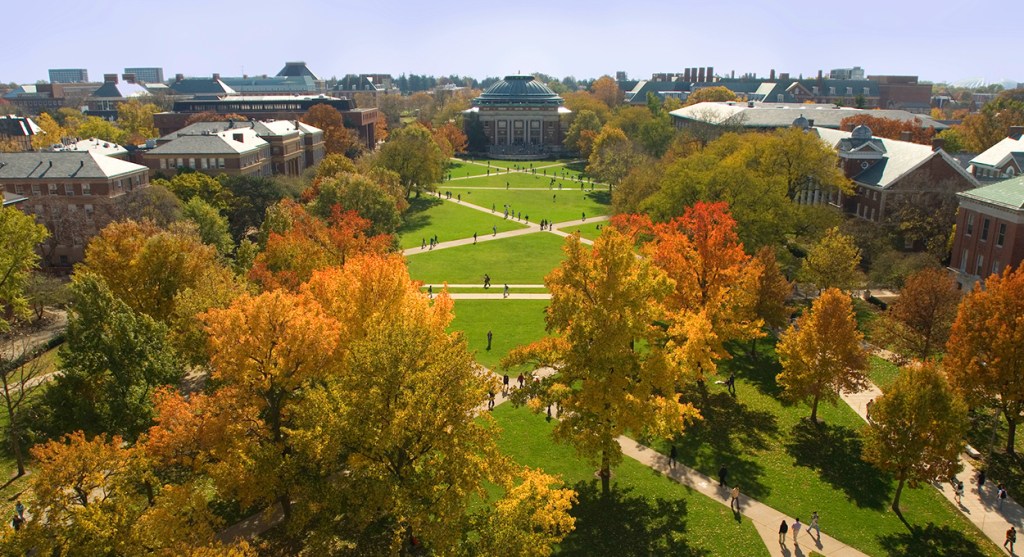
As for what is next upon departing Batavia? I go back home and then to the University of Illinois at Urbana Champaign, studying Political Science. I will not lie. I am hopeful for the future, but somewhat demurred that as this process continues, I will not get any younger. Comical, I know, however it does present a concern of how long I wish to be in academia. Time will tell. For now, I am excited at the prospects of what my new institution will offer.

University of Illinois Urbana-Champaign campus

As I prepare to graduate, I would like to take this time to thank the various professors, faculty and friends for imparting on me wisdom, advice, and friendship through the good times and rather questionable times. More importantly, I am thankful for the opportunity to understand the culture and way of living in this community. I have always believed that getting outside your comfort zone presents an opportunity to grow, and I feel that I have. My advice to those who are younger: Do not be afraid to take risks. The outside world can be intimidating, however, never turn down an opportunity to grow. Whether that process occurs through incidents of failure and frustration, learn to appreciate the journey.

I learned a valuable lesson from two mentors of mine who passed away a few years ago. Life is a like a train station, we all arrive and depart from stops—those stops being certain chapters in our lives. So, enjoy those “stops” along the way and more importantly, appreciate the people you encounter as you venture toward greater opportunities that await you.

Thanks to the many people who left an invaluable mark on me during my time at GCC.

As conductors on Chicago trains say “Doors Closing. Next stop is…”

CTA Train station in Downtown Chicago


Dennis Austin is a graduating Sophomore from Genesee Community College. He will enroll at the University of Illinois’ Champaign-Urbana campus in January.