
Qingming Festival is a traditional Chinese festival, which is also the most important festival for sacrifice, and it is 108 days after the winter solstice. The traditional Qingming Festival has been celebrated since Zhou Dynasty, which was about 2,500 years ago. The theme of this festival is to tend graves and have some outdoor activities.
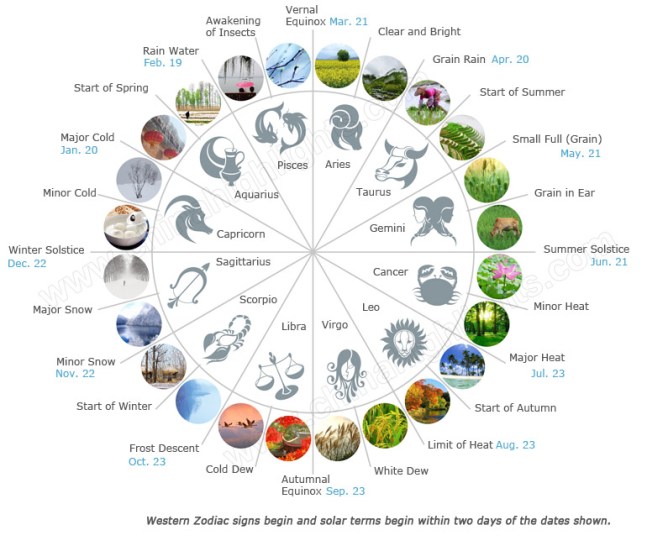
“Qingming” was just a name for a solar term at first. Solar terms are 24 points in calendars, and the most famous four terms that everyone knows are vernal equinox (Chunfen), summer solstice (Xiazhi), autumnal equinox (Qiufen), and winter solstice (Dongzhi). But there are actually 20 more terms that match astronomical events and/or natural phenomenon. For example, the rain water (Yushui) is on February 19, which means more rain than snow, and the awakening of insects (Jingzhe) is on March 6, which means hibernating insects awaken. The next coming solar term is the grain rain (Guyu), which means the rain will help the grain grow.
The traditional customs of this festival are graves tending, fire forbidden, being outdoor, planting trees, and playing with swing, kickball, and polo. The most important aspect is to worship and tend the graves and tombs. On the other hand, everyone has to go outside and have fun. Therefore, this is a really special festival, which involves tears from parting forever and laughs from playing outside.
About the food, it is always different everywhere in China, no matter if it’s a festival or not. In Jinnan, people make small loaf of steamed bread with a little walnuts, jujube, and beans in a specific shape, which is a traditional food called “mo” or “bo”. In Shanghai, there is a really healthy food called “qingtuan”. To make qingtuan, people stir the juice of brome into polished glutinous rice first. After it, they put sweetened bean or jujube paste in the middle as fillings. In the end, they steam this with a special kind of leaves on the bottom of the steamer, so the food smells and tastes fresh eventually. People in Shanghai have this with their special peach blossom porridge together. In some areas, people eat boiled eggs colored in red. There are also a plenty kinds of pastries desserts everywhere.
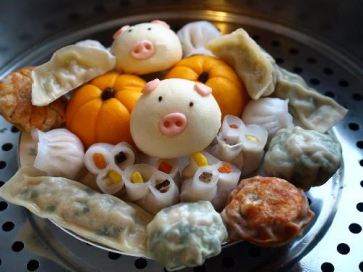
Mo or bo
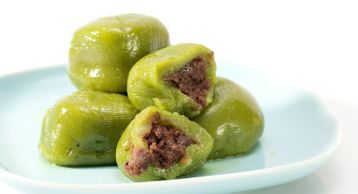
Qingtuan
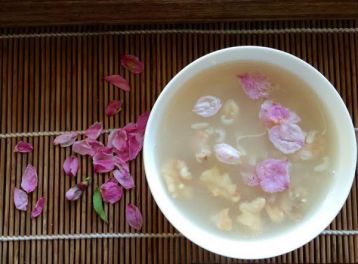
Peach blossom porridge
 Genesee Community College Blog